

A window can change the whole mood of a room. One minute it feels bare, bright, and exposed; the next, with the right fabric and placement, it feels warm, lived-in, and quietly beautiful. That’s why cafe curtains have stayed loved for so long.
They’re simple, but they solve a very real problem: how do you keep natural light while adding privacy? Full-length drapes can feel too heavy in kitchens, breakfast nooks, powder rooms, and small apartments. Blinds can look practical but cold. A softer half-window treatment gives you the best of both worlds.
I’ve seen this style work especially well in older homes with charming but awkward windows, rentals where drilling is limited, and compact kitchens where every design choice has to earn its place. When chosen carefully, cafe curtains kitchen styling can make even a basic window feel intentional.
This guide walks you through how to choose, size, hang, style, and care for the right cafe curtain look so your windows feel finished without blocking the light you actually enjoy.
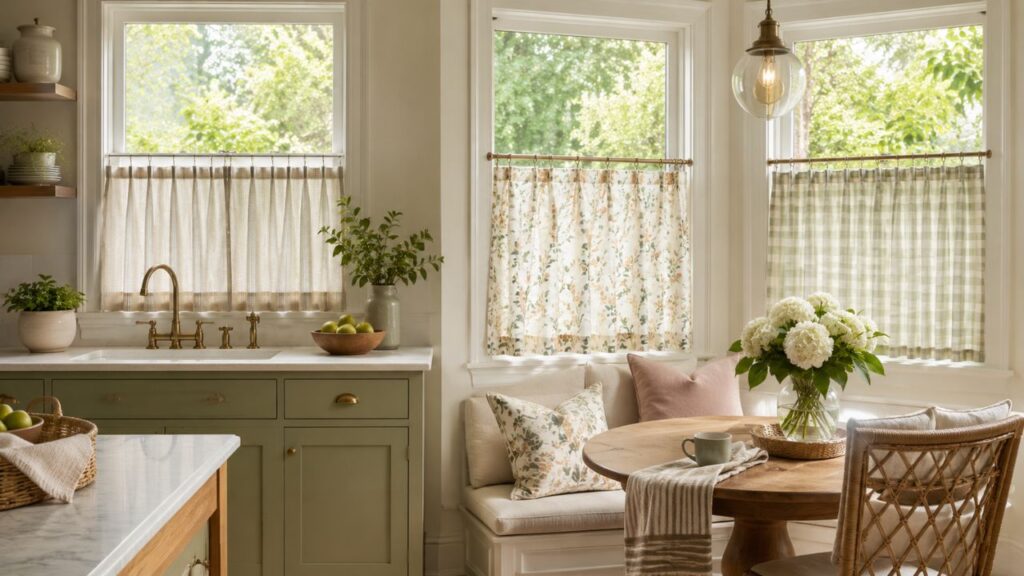
What Are Cafe Curtains?
Cafe curtains are short window curtains that usually cover the lower half of a window. They’re often hung from a small rod placed across the middle of the window frame, although some people hang them slightly higher or lower depending on privacy needs.
The style gets its name from old European cafés, where small curtains were used to give diners privacy while still allowing daylight to pour in from the upper part of the window. That same balance is why they still feel useful in modern homes.
Unlike full drapes, these curtains don’t dominate the wall. Unlike blinds, they add movement, softness, and texture. They’re especially helpful in rooms where you want filtered privacy rather than complete darkness.
How They Differ from Regular Curtains
Regular curtains usually cover the entire height of the window and often extend beyond the frame. They can make a room feel taller, grander, or more formal. A cafe curtain, on the other hand, feels lighter and more casual.
Here’s the practical difference:
- Full curtains create stronger privacy and light control.
- Half curtains preserve more natural light.
- Blinds offer precision but less softness.
- Shades look cleaner but can feel less decorative.
- Short curtains suit windows above sinks, counters, tubs, and built-ins.
That’s why this treatment works best when you want privacy at eye level without making the room feel closed in.
Why the Style Still Works in Modern Homes
Trends come and go, but some window treatments survive because they solve daily problems. These curtains are one of them. They help with street-facing windows, close neighbors, bright morning sun, and rooms where full fabric panels would get in the way.
They also fit many design styles. In a farmhouse kitchen, they look relaxed and homey. In a city apartment, they can feel tailored and European. In a cottage bathroom, they add charm without visual clutter.
Why Cafe Curtains Are Perfect for Kitchens, Bathrooms, and Small Spaces
The best window treatment is the one that matches how the room actually works. Kitchens, bathrooms, laundry rooms, and breakfast corners need privacy, light, and easy maintenance. Cafe curtains handle those needs beautifully.
A kitchen window over the sink, for example, doesn’t need dramatic floor-length panels. You need something that won’t brush the counter, catch cooking splatter easily, or block the view completely. That’s where a short curtain feels practical and pretty.
The Privacy Without Darkness Advantage
Privacy can be tricky. You may not want neighbors looking directly into your home, but you also don’t want to turn a bright room into a cave.
This is where cafe curtains kitchen ideas become useful. The lower half of the window hides the part people can see through most easily, while the uncovered top half keeps the room bright.
In most homes, that upper window space brings in the softest, most flattering daylight. Keeping it open makes the room feel larger and fresher.
Ideal Rooms for This Window Treatment
You can use this look in more places than just kitchens. It works well wherever you need modest privacy and visual softness.
Common rooms include:
- Kitchens, especially over sinks and breakfast nooks
- Powder rooms with street-facing windows
- Bathrooms where frosted glass feels too plain
- Laundry rooms that need a softer touch
- Sunrooms where full curtains would feel too heavy
- Entryways with narrow side windows
- Small dining corners or built-in banquettes
A cafe curtain can also work on glass cabinet doors, pantry windows, or interior French doors when you want a cozy, layered feeling.
Why They’re Helpful in Apartments
Renters often need window solutions that look good but don’t involve major installation. Tension rods, magnetic rods for metal doors, and inside-mount rods make this style easier to install without damaging trim.
That flexibility matters. You can dress up a plain rental kitchen, add privacy to a bathroom, or soften an awkward window without committing to custom treatments.
Best Fabrics for Cafe Curtains
Fabric choice decides whether your window looks airy, rustic, polished, or dated. Before buying, think about the room’s function first. A kitchen needs washable fabric. A bathroom needs moisture-friendly material. A dining nook can handle something more decorative.
The best cafe curtains usually have a natural drape, enough opacity for privacy, and a texture that suits the room.
Linen
Linen is one of the most popular choices because it looks relaxed without feeling sloppy. It filters light beautifully and gives a room that soft, lived-in look many homeowners love.
The downside is that pure linen wrinkles. Some people like that casual texture, while others prefer linen blends because they’re easier to maintain. For a kitchen or breakfast nook, a linen-cotton blend often gives the best balance.
Cotton
Cotton is practical, washable, and available in endless patterns. It works especially well for cafe curtains kitchen designs because it can handle regular cleaning better than delicate fabrics.
Choose plain cotton for a clean look, ticking stripes for farmhouse charm, or small prints for cottage style. Avoid overly stiff cotton unless you want a crisp, structured curtain.
Sheer and Semi-Sheer Fabrics
Sheer fabric gives a light, romantic look, but it won’t offer full privacy at night when indoor lights are on. Semi-sheer fabric often works better because it softens the view while still letting in plenty of daylight.
For bathrooms and street-facing rooms, test the fabric by holding it against a bright window. If you can clearly see shapes through it, it may not provide enough coverage.
Lace
Lace creates a vintage, delicate look. It suits cottages, historic homes, and romantic interiors, but it can feel too themed if the rest of the room is very modern.
A lace cafe curtain works best when the pattern is simple and the surrounding decor is restrained. Think painted wood, ceramic knobs, warm metals, and soft wall colors.
Polyester and Performance Blends
Polyester blends are often easier to wash, less prone to wrinkling, and more affordable. They’re useful in kitchens, bathrooms, and busy family homes.
The key is choosing a fabric that doesn’t look overly shiny. Matte finishes usually appear more natural and expensive.
How to Choose the Right Style for Your Home
A curtain that looks beautiful online may not work in your actual room. The wall color, cabinet finish, window size, ceiling height, and natural light all affect the final look. The best choice feels like it belongs to the room, not like it was added at the last minute.
When choosing cafe curtains, start with the mood you want. Do you want cozy, polished, airy, vintage, coastal, or modern?
Farmhouse and Cottage Style
Farmhouse-style windows often look best with linen, cotton, ticking stripes, gingham, or soft checks. The goal is warmth, not perfection.
Pair the curtains with wood tones, white cabinets, brass hardware, ceramic crocks, or open shelving. In this setting, a slightly gathered curtain feels natural.
For cottage interiors, small florals, lace trims, and soft pastels can work beautifully. Just keep the print scale small so it doesn’t overwhelm the window.
Modern and Minimal Style
Modern rooms need cleaner lines. Choose solid fabrics, subtle texture, and simple hardware. A flat or lightly gathered cafe curtain often looks better than a very ruffled one.
White, oatmeal, warm gray, muted olive, charcoal, or clay tones can look sophisticated. For hardware, slim black, brass, or brushed nickel rods usually work well.
French Bistro Style
This look feels classic for breakfast nooks and kitchens. Picture crisp white cotton, subtle stripes, small checks, or linen panels paired with café rods.
The trick is restraint. A French-inspired room doesn’t need every detail to feel Parisian. A simple curtain, a small table, bentwood-style chairs, and warm lighting can create the feeling without making the room look staged.
Coastal and Airy Style
For coastal homes, choose lightweight cotton, voile, linen blends, or soft blue and white patterns. The fabric should move gently and feel breezy.
This style works especially well when your kitchen gets strong natural light. A soft cafe curtain can cut glare without making the space feel heavy.
[IMAGE: Infographic showing cafe curtain fabric types, privacy levels, and best rooms]
Cafe Curtains Kitchen Ideas That Actually Work
The kitchen is where this window treatment shines. It adds softness to hard surfaces like tile, stone, stainless steel, and painted cabinetry. It also gives the room personality without taking up counter space.
When planning cafe curtains kitchen styling, think about how you use the space every day. Do you wash dishes under the window? Is the window close to the stove? Does the room face the street? These details matter.
Over-the-Sink Windows
A sink window is the classic spot. Hang the rod inside the frame if you want a clean built-in look. Hang it outside the frame if you want the window to feel wider.
For most sink windows, the curtain should stop at or just above the sill. You don’t want fabric touching wet surfaces or getting caught behind faucet handles.
A washable cotton or linen blend usually makes the most sense here. Even careful cooks deal with water spots, dust, and the occasional splash.
Breakfast Nooks
Breakfast nooks can handle a little more softness. If the windows wrap around a corner or sit behind a bench, short curtains help create a cozy, enclosed feeling without blocking daylight.
Here, you can use small patterns more confidently. Stripes, checks, and subtle florals add character, especially if the rest of the kitchen is neutral.
Glass Doors and Pantry Windows
A cafe curtain isn’t limited to standard windows. You can use it on glass pantry doors, back doors, or French doors when you want privacy without covering the entire glass.
For doors, use rods at the top and bottom if you want the fabric to stay in place. This prevents the panel from swinging when the door opens or closes.
Matching Curtains with Kitchen Finishes
Your curtain should talk to something else in the kitchen. It doesn’t have to match perfectly, but it should connect.
Try these pairings:
- White cabinets with warm linen or soft stripes
- Navy cabinets with cream cotton or ticking fabric
- Wood cabinets with oatmeal, sage, or muted plaid
- Black hardware with black café rods
- Brass faucets with aged brass rods
- Marble counters with crisp white or ivory panels
A thoughtful pairing makes cafe curtains kitchen decor feel designed instead of random.
How to Measure and Hang Cafe Curtains
Measuring sounds simple, but it’s where many people make mistakes. Too narrow, and the curtain looks skimpy. Too long, and it gets messy. Too high or low, and the proportions feel off.
Good measuring makes cafe curtains look custom even when they’re ready-made.
Decide Rod Placement First
Most people place the rod halfway up the window, but that isn’t a rule. The right height depends on what you need to hide.
If the window faces a sidewalk or neighbor’s house, sit or stand where privacy matters most. Mark the point where you want coverage to begin. That’s often better than blindly placing the rod at the exact center.
For bathrooms, you may want the rod slightly higher. For kitchens, lower placement may be enough.
Measure Width
Measure the window width from inside edge to inside edge if you’re mounting inside the frame. For outside mounting, measure the full area you want to cover.
For a gathered look, use panels that total about 1.5 to 2 times the window width. For a cleaner modern look, use less fullness. For a romantic cottage look, use more.
Example: if your window is 36 inches wide, choose total curtain width between 54 and 72 inches for soft gathering.
Measure Length
Measure from the rod location to where you want the curtain to end. Common stopping points include:
- Just above the sill
- At the sill
- Slightly below the sill
- Halfway between rod and sill for a decorative look
For kitchens and bathrooms, stopping at or just above the sill usually looks cleanest.
Choose the Right Hardware
The hardware should fit the room. A thin rod looks delicate and traditional. A thicker rod feels more modern. Tension rods are practical for renters but may not look as refined as mounted rods.
Popular hardware finishes include:
- Black for modern contrast
- Brass for warmth
- Nickel for classic kitchens
- White for a quiet, built-in look
- Bronze for rustic or traditional rooms
A cafe curtain with the right rod often looks more expensive than it is.
Privacy, Light, and Practical Daily Use
Beautiful window treatments still need to work at 7 a.m. when you’re making coffee or 9 p.m. when the lights are on. Before you choose fabric, think about daylight, nighttime privacy, cleaning, pets, kids, and how often you open the window.
This is the practical side of cafe curtains, and it’s where the right choice makes life easier.
Daytime Privacy
During the day, most semi-sheer fabrics give enough privacy if the room is brighter outside than inside. They blur the view but keep the space open.
If your window is directly across from a neighbor’s window, choose a tighter weave. Linen blends, cotton, and textured polyester usually offer better coverage than sheer voile.
Nighttime Privacy
At night, indoor lighting changes everything. A fabric that feels private during the day may become see-through after dark.
For bathrooms or street-facing windows, test the curtain at night before committing. Turn on the lights, step outside if possible, and check what can be seen. If the outline is too visible, choose a lined or denser fabric.
Light Control
These curtains don’t darken a room the way blackout shades do. That’s part of their charm. They’re meant to soften light, not remove it.
For harsh afternoon sun, pair them with woven shades or top-down bottom-up shades. Layering gives you more control while keeping the relaxed look.
Cleaning and Maintenance
Kitchens collect grease, dust, and cooking residue. Bathrooms collect humidity. That means washable fabric matters.
Check care labels before buying. Cotton, polyester blends, and some linen blends are easier to clean than delicate lace or dry-clean-only fabrics. Wash on a gentle cycle, avoid high heat, and rehang while slightly damp if you want fewer wrinkles.
Common Mistakes to Avoid
Small curtains can still create big design problems when the scale, fabric, or placement feels wrong. The good news is that most mistakes are easy to avoid once you know what to look for.
Choosing Fabric That’s Too Thin
Thin fabric may look pretty in a product photo, but it can disappoint in real life. If privacy matters, avoid anything that turns transparent at night.
A good cafe curtain should filter light while still giving you comfort. Hold fabric up to a bright window before sewing or buying.
Using Too Little Fullness
Flat panels can look sharp in modern spaces, but skimpy curtains often look unfinished. If the fabric barely covers the window when closed, the treatment loses charm.
Use enough width to create gentle folds. Even a simple cotton panel looks better with proper fullness.
Hanging the Rod at an Awkward Height
A rod placed too low can make the window look chopped. A rod placed too high may block more light than necessary.
Let privacy guide the placement. Then step back and check the proportions from across the room.
Ignoring the Room’s Existing Style
A lace-trimmed curtain might feel sweet in a cottage kitchen but out of place in a sleek modern condo. A bold graphic print might work in a playful breakfast nook but overwhelm a small bathroom.
The curtain doesn’t need to match everything. It just needs to feel connected to the room’s colors, finishes, and mood.
Forgetting About Clearance
Windows above sinks, counters, and radiators need practical clearance. Fabric should not drag into water, heat, or cooking areas.
This matters most for cafe curtains kitchen installations, especially near sinks and stoves.
Custom, Ready-Made, or DIY: Which Option Is Best?
You have three main paths: buy ready-made panels, order custom curtains, or make them yourself. Each option has a place, depending on your budget, window size, and how specific your vision is.
Ready-Made Curtains
Ready-made options are affordable and easy to find. They work best for standard window sizes and simple rooms.
The limitation is sizing. You may need to adjust rod placement or hem the panels to get the right fit. Still, ready-made curtains are a smart choice if you want a quick refresh.
Custom Curtains
Custom panels cost more, but they solve tricky problems. If your windows are unusually wide, narrow, shallow, or historic, custom sizing can make a huge difference.
Custom also lets you choose exact fabric, fullness, lining, header style, and length. For a room you use every day, that level of detail can be worth it.
DIY Curtains
If you can sew a straight line, you can make a simple cafe curtain. Even no-sew versions are possible with hem tape, clip rings, and lightweight fabric.
DIY works especially well if you love vintage textiles. Tea towels, linen remnants, embroidered fabric, and lightweight tablecloths can become charming short curtains.
Budget Expectations
Prices vary widely. A basic ready-made pair can be inexpensive, while custom linen panels may cost much more. Hardware also affects the total.
A smart approach is to spend more where the window is highly visible, such as the main kitchen sink window, and save on secondary spaces like laundry rooms.
Styling Details That Make the Look Feel Finished
The difference between “nice” and “beautiful” often comes down to small choices. Rod finish, curtain header, fabric texture, and nearby decor all shape the final impression.
Header Styles
The header is how the curtain attaches to the rod. Common styles include rod pocket, clip rings, pinch pleats, and tie tops.
Rod pockets feel simple and traditional. Clip rings are easy to open and close. Pleats look more tailored. Tie tops feel casual and romantic.
For everyday use, clip rings are often the most practical because the panels move easily.
Color Choices
White and ivory are classic, but they’re not your only options. Warm neutrals, faded blue, soft green, muted terracotta, and gentle stripes can add personality without overwhelming the room.
If the room already has patterned tile or bold wallpaper, choose a quieter curtain. If the room is plain, the curtain can carry more visual interest.
Layering with Other Treatments
You can layer short curtains with woven shades, Roman shades, or simple valances. Layering works well when you need privacy at different times of day.
For example, a woven shade can block strong sun, while the half curtain keeps the lower window private during normal use.
Seasonal Swaps
One underrated benefit of this style is how easy it is to change. A lightweight cotton panel in spring can be swapped for warm linen in fall.
This gives your kitchen or nook a fresh feeling without repainting, buying furniture, or replacing major decor.
Frequently Asked Questions
Are cafe curtains outdated?
They’re not outdated when styled with the right fabric and hardware. Older versions can look fussy, but simple linen, cotton, or tailored panels feel fresh in modern homes. The key is choosing a style that matches your room rather than copying a dated look.
Can I use cafe curtains in a living room?
Yes, but they work best in casual living rooms, reading corners, sunrooms, or spaces where you want light more than full privacy. For a formal living room, you may want to layer them with full drapes or shades. That gives the room more height and presence.
What is the best rod height for cafe curtains?
The best height depends on your privacy needs and window proportions. Many people hang the rod around the midpoint of the window, but you can raise it if the room faces a busy street. Always test the view from inside and outside before installing.
Should cafe curtains touch the window sill?
They can touch the sill, stop slightly above it, or hang just below it. In kitchens and bathrooms, stopping just above the sill often looks cleaner and keeps fabric away from water. In dining nooks, a slightly longer length can feel softer.
Can cafe curtains look elegant?
They can look very elegant when the fabric, fullness, and hardware are chosen carefully. Linen panels with brass rods, tailored pleats, or subtle stripes can feel refined rather than casual. The elegance comes from proportion and restraint.
Do cafe curtains provide enough privacy at night?
They can, but only if the fabric is dense enough. Sheer fabric may become see-through when indoor lights are on. For nighttime privacy, choose cotton, lined linen, textured fabric, or a double-layered panel.
Are cafe curtains good for small kitchens?
They’re excellent for small kitchens because they don’t visually crowd the room. Full curtains can feel heavy in tight spaces, while short panels soften the window and keep the upper glass open. That helps the kitchen feel brighter and more spacious.
What patterns work best for cafe curtains?
Small-scale patterns usually work best because the panels are short and close to eye level. Thin stripes, checks, gingham, tiny florals, and subtle block prints are safe choices. Large patterns can work, but they need enough window width to breathe.
Final Thoughts
The reason cafe curtains keep returning to beautiful homes is simple: they make everyday rooms feel warmer while solving real privacy and light problems. They’re modest, practical, and surprisingly flexible.
Whether you love crisp white cotton, relaxed linen, cottage lace, or tailored stripes, the right short curtain can make a kitchen, bathroom, or breakfast nook feel more personal. It doesn’t need to be expensive or complicated. It just needs to fit the window, the room, and the way you live.
A well-dressed window has a quiet effect. You notice the softer light, the added comfort, and the sense that the room is finally finished.