
Introduction
There is something lovely about sitting indoors while still feeling close to the breeze, garden, rain, and evening light. That is why three season rooms have become such a popular upgrade for homeowners who want more usable space without building a full year-round addition.
A three season room gives you a protected place to relax in spring, summer, and fall. It can work as a reading nook, breakfast area, plant room, family lounge, or quiet escape after a long day.
It matters because this type of room can improve comfort, add charm, and stretch your living space. However, it also needs smart planning, especially around insulation, windows, flooring, ventilation, permits, and cost.
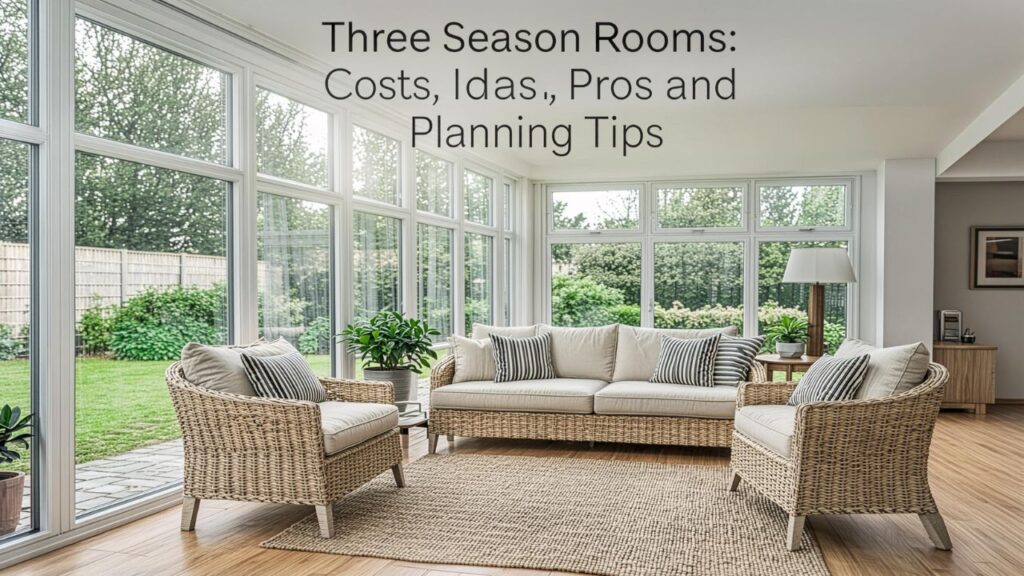
Table of Contents
- What Are Three Season Rooms?
- Why Three Season Rooms Are Popular
- Three Season Rooms vs Four Season Rooms
- Best Design Ideas
- Cost and Budget Planning
- Materials and Window Options
- Flooring, Lighting, and Furniture
- Heating, Cooling, and Comfort
- Common Mistakes to Avoid
- Personal Background and Financial Insights
- FAQs
- Conclusion
What Are Three Season Rooms?
Three season rooms are enclosed living spaces designed for use during spring, summer, and fall. They are often built from an existing porch, patio, deck, or new framed addition.
Unlike a four-season sunroom, a three season room usually does not have full insulation, full HVAC, or the same thermal performance as the main house. It may have screens, vinyl windows, glass panels, or sliding windows that protect the space from bugs, rain, wind, and debris.
In simple words, it sits between a screened porch and a fully finished home addition. You get more comfort than an open porch, but less winter protection than a true year-round room.
Why Three Season Rooms Are Popular
People love three season rooms because they make outdoor living easier. You can enjoy sunlight and fresh air without fighting mosquitoes, sudden rain, or leaves blowing across your table.
They are also usually less expensive than four-season additions. HomeAdvisor lists three-season rooms at around $10,000 to $40,000, while four-season rooms can range much higher because they need better insulation and climate control.
Common reasons homeowners build one include:
- More relaxing space
- Better backyard views
- A protected dining area
- A bug-free porch
- A cozy reading room
- A plant-friendly sunroom
- More entertaining space
- Better use of an existing patio or deck
For many families, it becomes the most loved room in the house.
Three Season Rooms vs Four Season Rooms
The biggest difference is comfort during cold weather.
| Feature | Three Season Room | Four Season Room |
|---|---|---|
| Main use | Spring, summer, fall | All year |
| Insulation | Limited or minimal | Full insulation |
| Windows | Screens, vinyl, or single-pane options | Insulated glass |
| HVAC | Usually not connected | Often connected or separately heated/cooled |
| Cost | Usually lower | Usually higher |
| Winter comfort | Limited | Much better |
| Building complexity | Moderate | Higher |
| Angi notes that three-season sunrooms often use single-pane windows and minimal insulation, while four-season rooms are built for year-round comfort with stronger insulation and dedicated heating or cooling. | ||
| If you live in a mild climate, a three season room may be enough. If winters are harsh and you want daily use in January, a four-season room may be the better choice. |
Best Design Ideas
Cozy Reading Room
Add a cushioned chair, small side table, warm lamp, woven rug, and bookshelves. This makes the room feel peaceful without needing much furniture.
Decor Home Cafe inspires stylish living with creative ideas from Havenly DIY and timeless trends from Grandmillennial.net. Discover unique pieces through Faire Decor and elevate your space with practical tips from DIY apt therapy. Create a warm, personalized home filled with charm, comfort, and beautiful design inspiration.
Breakfast or Coffee Space
A small table and two to four chairs can turn the room into a bright morning spot. It works beautifully if the room faces a garden, patio, or sunrise view.
Indoor Garden Room
Three season rooms are great for plants because they often receive plenty of natural light. Use plant stands, hanging baskets, and washable flooring.
Family Lounge
Use a compact sofa, indoor-outdoor rug, storage ottoman, and soft throw pillows. Choose furniture that can handle humidity and temperature swings.
Entertainment Space
For gatherings, add a dining table, ceiling fan, string lights, and easy-clean seating. Keep the layout open so people can move comfortably.
![Image suggestion: Three season room used as a cozy family lounge with plants, sofa, ceiling fan, and patio view]
Cost and Budget Planning
The cost of three season rooms depends on size, structure, materials, labor, foundation, windows, roof, electrical work, and whether you are enclosing an existing porch.
HomeAdvisor reports a typical three-season room range of about $10,000 to $40,000. Better Homes & Gardens also notes that three-season sunrooms commonly cost around $15,000 to $40,000, while more complete four-season rooms usually cost more.
| Cost Factor | Why It Matters |
|---|---|
| Size | Larger rooms need more framing, windows, roofing, and flooring |
| Existing structure | Enclosing a porch may cost less than building new |
| Windows | Glass, vinyl, and insulated options vary in price |
| Foundation | Slabs, piers, and deck upgrades affect cost |
| Roof | Matching the home roof may increase cost |
| Electrical work | Fans, outlets, and lighting add expense |
| Permits | Local rules may require inspections |
| Finishes | Flooring, trim, paint, and furniture change the final budget |
| A basic room may be simple and affordable. A larger custom room with premium windows, matching rooflines, lighting, and high-end flooring can cost much more. |
Materials and Window Options
The right materials help the room handle changing temperatures, humidity, sun exposure, and everyday use.
Window Choices
Common options include:
- Screens for airflow
- Vinyl windows for flexible seasonal use
- Glass windows for better weather protection
- Sliding panels for easy opening
- Storm panels for added protection
Vinyl window rooms are often marketed as flexible spring-to-fall options. One 2025 pricing guide listed vinyl window three-season rooms around $15,000 to $25,000, with glass sunrooms often costing more.
Frame Materials
| Material | Best Feature | Watch Out For |
|---|---|---|
| Aluminum | Lightweight and lower maintenance | Can transfer heat and cold |
| Vinyl | Affordable and easy to clean | Quality varies |
| Wood | Warm, classic look | Needs more upkeep |
| Composite | Durable and stable | Can cost more |
Wall and Roof Materials
Match the home where possible. A room that looks like it belongs to the house usually feels more valuable than one that looks added later.
Flooring, Lighting, and Furniture
Flooring
Choose flooring that can handle moisture, sunlight, and temperature changes.
Good options include:
- Porcelain tile
- Luxury vinyl plank
- Composite decking
- Sealed concrete
- Indoor-outdoor rugs
- Painted porch flooring
Avoid delicate materials that may warp or stain easily.
Lighting
Layered lighting makes the room useful after sunset. Try ceiling fans with lights, wall sconces, table lamps, and soft string lights.
Furniture
Use furniture that feels comfortable but can survive seasonal changes. Wicker, rattan-style pieces, metal frames, teak, and outdoor-rated cushions are smart choices.
Heating, Cooling, and Comfort
Three season rooms are not usually built for full winter comfort, but you can still make them more enjoyable.
Comfort upgrades include:
- Ceiling fan
- Cross-ventilation
- Solar shades
- Portable electric heater
- Outdoor-rated rugs
- Weatherstripping
- Insulated curtains
- Dehumidifier
- Shade trees or awnings
That said, be careful with heating. If you want permanent heating or cooling, your local code may treat the room differently. Always ask a contractor or building department before adding major systems.
Common Mistakes to Avoid
Treating It Like a Four-Season Room
A three season room is not built the same way as a fully conditioned addition. Expect limited winter use.
Ignoring Permits
Many porch enclosures and sunroom additions need permits. Rules vary by location.
Choosing Poor Flooring
Temperature swings and humidity can damage the wrong flooring.
Forgetting Ventilation
Without airflow, the room can feel hot, stuffy, or damp.
Buying Indoor Furniture Only
Normal indoor furniture may fade, swell, or smell musty in a seasonal room.
Underestimating the Roof
A poorly planned roofline can cause leaks, drainage issues, or an awkward exterior look.
Personal Background and Financial Insights
This topic is about a home improvement feature, not a public person, so personal background and net worth are not directly applicable.
However, the “career journey” of three season rooms is interesting. Many started as simple screened porches. Over time, homeowners wanted more protection from bugs, rain, pollen, and wind, so porch enclosures became more refined with better windows, stronger frames, and more comfortable finishes.
Financially, three season rooms can be a smart lifestyle investment. They may not always add the same appraised value as fully heated living space, but they can improve daily enjoyment and buyer appeal. The best return often comes when the room looks integrated with the home, is well-built, and fits the local climate.
FAQs
What are three season rooms used for?
They are used for relaxing, dining, reading, entertaining, growing plants, and enjoying outdoor views during spring, summer, and fall.
Are three season rooms heated?
Usually, they are not connected to the main HVAC system. Some homeowners use portable heaters, ceiling fans, or seasonal comfort upgrades.
How much do three season rooms cost?
Many three-season rooms cost around $10,000 to $40,000, but the final price depends on size, materials, foundation, windows, roof, labor, and local permits.
Can I use a three season room in winter?
In mild climates, maybe. In cold climates, it may be too chilly without proper insulation and heating.
Is a three season room better than a screened porch?
It offers more protection than a screened porch because it may include windows or panels. A screened porch gives more airflow but less weather control.
Do three season rooms add home value?
They can improve appeal and usable space, especially when well designed. However, value depends on build quality, climate, local market, and whether the room is permitted.
What is the best flooring for a three season room?
Porcelain tile, luxury vinyl plank, sealed concrete, and composite decking are popular because they handle moisture and temperature changes better than delicate flooring.
Do I need a permit?
Often, yes. Permit rules depend on your city, structure, electrical work, foundation, and whether the room changes the home’s footprint.
Can I build a three season room on an existing deck?
Sometimes, but the deck must be strong enough to support the enclosure. A contractor should inspect the structure first.
Conclusion
Three season rooms are a beautiful middle ground between an open porch and a full home addition. They give you more comfort, more light, and more connection to the outdoors without the higher cost of a fully insulated four-season room.
The best results come from smart planning. Think about your climate, budget, windows, flooring, furniture, ventilation, and permits before building.
When designed well, three season rooms feel calm, useful, and deeply inviting. They become the kind of space where morning coffee lasts longer, rainy days feel softer, and home feels just a little more peaceful.