

There is nothing relaxing about climbing into bed and discovering that your phone cable has slipped behind the furniture again. A well-designed nightstand with charging station solves that small nightly frustration by keeping power, storage, and everyday essentials within easy reach.
This type of furniture matters because the bedside area has become one of the busiest zones in the bedroom. Phones, watches, earbuds, lamps, books, medication, and glasses all compete for limited space. The right design can reduce visual clutter without making the room feel like a home office or electronics counter.
A charging nightstand combines a traditional bedside surface with built-in electrical access, usually through AC outlets, USB ports, USB-C ports, or a wireless charging pad. The concept is simple, but the quality and usefulness vary widely between models.
Some nightstands with charging station features look impressive online yet become awkward in daily use. Ports may sit behind the lamp, drawers may be too shallow, or the main power cord may be too short to reach the wall. Looking beyond the product photo helps you choose furniture that genuinely improves your routine.
A night stand with charging station can work in a primary bedroom, guest room, dorm, studio apartment, or teenager’s room. It is especially practical where wall outlets are limited or hidden behind a bed frame.
A bedside table with charging station should still function first as furniture. Stable construction, useful dimensions, sensible storage, and a surface that is easy to clean are just as important as the charging technology.
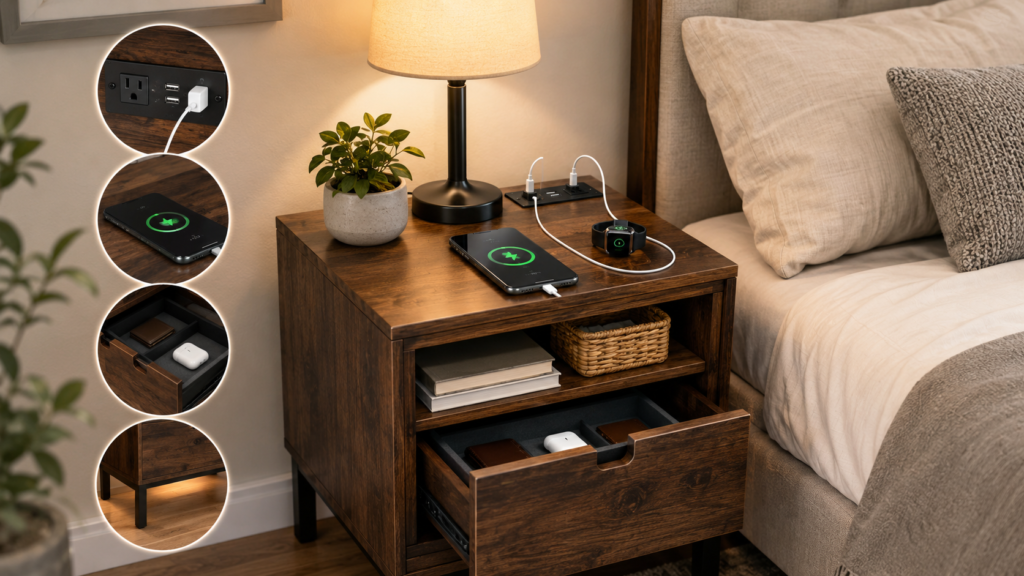
What Makes a Nightstand With Charging Station Useful?
A nightstand with charging station places electrical connections where you can reach them without stretching toward a wall outlet. It can also reduce the need for a separate extension board on the floor, which often creates tangled cables and collects dust.
The best models do more than add ports. They position those ports where plugs do not block the tabletop, provide a route for cables, and leave enough space for a lamp and personal items. Good design makes the technology feel almost invisible.
Common Charging Features
Most models include some combination of:
- Standard AC outlets for lamps, laptops, or small devices
- USB-A ports for older charging cables
- USB-C ports for newer phones, tablets, and accessories
- A wireless charging pad built into the top
- Cable openings or grooves that guide wires behind the table
- A master switch or surge-protection feature on selected products
A charging nightstand with both AC and USB connections offers more flexibility than a USB-only model. However, buyers should check the stated output of each USB port because a port that powers a small accessory may charge a modern phone or tablet slowly.
Match the Height to Your Bed
Height is one of the most overlooked measurements. Ideally, the tabletop should sit close to the top of the mattress, making it easy to reach a drink, silence an alarm, or place down a phone without leaning sharply.
A table that is several inches too low can feel inconvenient, while one that is too high may dominate the bed and make the lamp shine at an uncomfortable angle. Measure from the floor to the top of the mattress after the bedding is in place.
When comparing nightstands with charging station options, check the full product height rather than relying on styled photographs. Product images may use low platform beds or thick mattresses that change the apparent proportions.
For a tall bed, look for models around mattress height or slightly above it. For a platform bed, a lower and wider table often looks better. In a child’s room, consider how the furniture height affects both reach and stability.
Choose the Right Width and Depth
The ideal width depends on the bed, room size, and what you keep beside you. A narrow unit may be enough for a phone and small lamp, while a wider table can support books, a water carafe, and decorative objects.
Depth matters when walkways are tight. A deep table can interrupt the path around the bed, especially near a wardrobe or doorway. Measure the available floor area and leave enough room for drawers or cabinet doors to open fully.
A compact night stand with charging station can be a smart choice for apartments and guest rooms, but avoid models that are so small that connected devices hang over the edge. The tabletop should hold your nightly essentials without forcing you to stack them.
A larger bedside table with charging station may provide better storage, yet it should not extend far beyond the width of the headboard area. Balanced proportions make the entire bedroom look calmer.
Check the Port Types Before Buying
Before buying a nightstand with charging station, remember that port count alone does not tell you whether the table will meet your needs. Think about which devices you charge overnight and which cables they use. A household that uses USB-C devices may find several USB-A ports less useful than one well-powered USB-C connection.
Check whether the listed USB-C port supports only basic charging or higher-output charging. Product pages should state the output in watts or provide clear electrical ratings. When those details are missing, ask the seller before ordering.
A charging nightstand with two AC outlets, one USB-A port, and one USB-C port may be more useful than a model crowded with several low-output connections. The right mix matters more than the highest number.
Wireless charging can be convenient, but phone cases, camera bumps, alignment, and charging-pad output can affect performance. Treat it as a useful extra rather than the only charging method available beside the bed.
Look Carefully at Outlet Placement
Outlets placed on the tabletop are easy to reach, but plugs and adapters may take up valuable surface area. They can also expose bright indicator lights near eye level at night.
Rear-mounted outlets keep the top cleaner, although they may be difficult to access if the table sits tightly against the wall. Side-mounted connections often provide a good compromise, particularly when they are positioned near the back edge.
On a nightstand with charging station, consider how a bulky phone adapter, lamp plug, or laptop charger will sit once connected. Two outlets may be technically available but impossible to use together if they are spaced too closely.
Also check whether cables will cross the drawer opening or hang along the visible side of the table. A small cable notch, rear opening, or recessed power panel can make daily use much neater.
Examine the Main Power Cord
Built-in ports still require one main cord running from the table to a wall outlet. Confirm the cord length before purchase, especially if the nearest outlet sits behind the headboard or on the opposite side of the bed.
A short cord may force you to use an additional extension lead, reducing the convenience of buying powered furniture in the first place. Measure the actual route around the bed rather than estimating a straight line.
The cord should also have a sensible exit point. A rear cord is usually less visible, while a side cord may be easier to route in a tight corner. Look for strain relief where the wire enters the unit and avoid placing furniture legs on the cable.
A night stand with charging station should sit flat and stable after the cable is routed. If the plug or power module pushes the unit away from the wall, measure the required clearance before deciding on placement.
Prioritize Safe, Sensible Electrical Design
Powered furniture should come with clear electrical specifications, installation instructions, and seller or manufacturer contact details. Avoid products with vague descriptions, damaged cords, loose sockets, or no information about the built-in power module.
Do not overload integrated outlets with high-demand appliances unless the manufacturer explicitly states that the unit supports them. Bedside charging stations are generally intended for personal electronics, lamps, and similar low-demand devices.
Keep drinks away from the charging panel and make sure vents or electrical components are not covered by bedding. If the unit becomes unusually hot, produces a smell, sparks, buzzes, or shows damage, unplug it and stop using the powered feature.
A reliable bedside table with charging station should make cable use simpler, not encourage unsafe habits. Read the care instructions, inspect the cord occasionally, and keep the area behind the furniture free of crushed plugs and heavy dust buildup.
Decide How Much Storage You Need
Storage style changes how the furniture feels in everyday use. One drawer offers a place for private or untidy items, while an open shelf keeps books and baskets easy to reach. A cabinet provides more hidden capacity but may look visually heavier.
Think about what actually belongs beside the bed. Common items include reading glasses, medication, tissues, chargers, a notebook, headphones, and remote controls. Assigning each item a place prevents the tabletop from becoming crowded again.
Some nightstands with charging station designs place the power module inside a drawer. This hides devices and cables, but the drawer must provide enough room and ventilation, and wires should not be pinched when it closes.
For a minimalist room, choose one drawer and a clean open base. For a guest room, a drawer plus an open shelf gives visitors visible space without requiring them to rearrange your belongings.
Select Materials That Suit Daily Life
Solid wood can be durable and repairable, but it may cost more and change slightly with humidity. Engineered wood is common in affordable models and can perform well when edges, hardware, and surfaces are properly finished.
Metal frames create a lighter visual profile and often suit industrial or contemporary bedrooms. Upholstered designs can soften the room, although fabric surfaces may require more care and can be less practical near drinks.
A charging nightstand should have a tabletop that tolerates routine cleaning and minor spills. Coasters still help, especially on wood veneer, painted finishes, or surfaces that may react to heat and moisture.
Inspect weight limits for the top, drawers, and shelves. A slim-looking table may not be designed to support a heavy lamp, stacks of books, or frequent pulling on an open drawer.
Compare Drawer and Hardware Quality
A drawer that sticks or tilts will remain annoying long after the novelty of built-in charging wears off. Look for smooth runners, secure handles, aligned fronts, and a drawer box deep enough for the items you plan to store.
Soft-close hardware is pleasant but not essential. More important is whether the drawer opens fully enough to access the back and whether connected cables interfere with movement.
A well-built night stand with charging station should not wobble when a drawer is opened. Adjustable feet can help on uneven floors, and wall-anchoring hardware adds reassurance for tall or top-heavy designs.
Read assembly instructions before purchase when they are available. The number of parts, type of connectors, and clarity of diagrams can reveal whether installation is straightforward or likely to be frustrating.
Make Cable Management Part of the Plan
A nightstand with charging station does not automatically eliminate cable clutter. Short device cables can keep the tabletop tidy, while long cables may fall behind the furniture or gather around the legs.
Use reusable cable ties, adhesive clips rated for furniture, or a discreet cable sleeve to group wires. Leave enough slack to pick up a phone comfortably without pulling on the port.
On a bedside table with charging station, route cables away from drawer slides, hinges, and sharp edges. Avoid tightly coiling active charging cables or trapping them under heavy objects.
Labeling similar cables can also help in a shared bedroom. A simple, organized setup is easier to clean and makes it less likely that the wrong cable will be pulled or damaged.
Consider the Bedroom’s Style
Charging furniture is available in farmhouse, industrial, mid-century, modern, traditional, and minimalist designs. Choose a shape and finish that relate to the bed, flooring, and other major pieces rather than matching every item exactly.
Wood tones can be mixed when their undertones feel compatible. A walnut table may sit comfortably near a black bed frame, while light oak can soften a room with white or cream upholstery.
A pair of matching nightstands with charging station units creates symmetry in a primary bedroom. In a smaller or more relaxed room, two different tables can work if their heights and visual weight are similar.
Avoid selecting a model only because its charging panel looks advanced. The table will remain visible all day, so proportion, material, and finish should support the room even when no device is connected.
When a Wireless Charging Top Is Worth It
A wireless pad is useful for people who place the same compatible phone in the same spot each night. It removes the need to connect a cable in the dark and leaves the phone easy to pick up.
However, the charging zone may occupy the best part of the tabletop. Decorative objects, metal items, or a lamp base can interfere with access, so check the pad location before buying.
A nightstand with charging station that includes both wireless and wired options offers a useful backup. Wired charging may be preferable when you need a faster or more dependable connection.
Look for clear markings that show where the phone should sit. A pad that blends completely into the surface may look elegant but can be irritating when alignment takes several attempts.
Assembly, Delivery, and Placement
Some models arrive fully assembled, while flat-pack furniture may require one to two people, basic tools, and careful alignment. Read customer comments about assembly only as supporting information; use the official instructions and parts list as the main guide.
Before delivery, measure doorways, stairs, and the space beside the bed. Protect flooring during assembly and build the unit close to its final location if it will be difficult to move.
After placing the nightstand with charging station, check that it does not rock and that drawers open without touching the bed. Plug the main cord directly into the intended wall outlet according to the manufacturer’s instructions.
Test every outlet and charging port before loading the drawers. This makes it easier to identify a problem while the product is still within the seller’s return or replacement period.
Is the Upgrade Worth the Price?
A powered table is worth considering when you charge several devices beside the bed, have limited wall outlets, or want fewer visible adapters. It may offer less value if you already have well-positioned outlets and a cable-management system that works.
Prices vary according to size, material, construction, charging hardware, storage, brand, and delivery method. Compare the quality of the furniture as well as the number of electrical features.
An inexpensive charging nightstand can be suitable for a guest room or temporary space, while a better-built piece may make sense for daily long-term use. Check the warranty for both the furniture and the power components where those terms are provided separately.
The best value is not necessarily the model with the most ports. It is the one that fits the bed, supports your devices, stores what you need, and remains stable during normal use.
Frequently Asked Questions
Where can I buy a nightstand with charging station near me?
Check local furniture stores, bedroom specialists, home-goods retailers, office-furniture shops, and large retail warehouses. Search store inventory online before visiting, then call to confirm that the display model is available.
Seeing the table locally lets you test its height, drawer movement, finish, and outlet placement before paying for delivery.
How much does a powered nightstand usually cost near me?
Pricing depends on materials, size, storage, electrical features, and whether assembly or delivery is included. Budget flat-pack models usually cost less than solid-wood or fully assembled furniture.
Ask local sellers for the final price with tax, delivery, upstairs placement, assembly, and old-furniture removal so quotes can be compared fairly.
Can a local electrician add charging ports to my existing nightstand?
An electrician can advise on safe power access near the bed, but modifying furniture may involve additional product, fire, and warranty considerations. Do not cut into a table or install a power module without the right expertise.
Ask whether the proposed components are intended for furniture installation and request a clear written scope of work.
How quickly can a bedside table with charging station be delivered?
In-stock local models may be available for pickup or delivery within a few days, while special finishes and back-ordered products can take several weeks.
Confirm that the item is physically in stock rather than relying on an estimated website date. Ask whether delivery includes room placement or only curbside drop-off.
How do I know whether a local furniture seller is trustworthy?
Look for a real business address, clear contact information, written return terms, itemized pricing, and a process for damaged or missing parts. Examine floor models and ask who handles warranty claims.
Reliable sellers explain limitations clearly instead of promising that every charging feature will work with every device.
Can I get nightstands with charging station assembled at home?
Many local retailers and independent furniture assemblers offer in-home assembly. Confirm whether the service includes unpacking, full construction, leveling, testing the charging panel, wall anchoring when appropriate, and removal of packaging.
Keep the instructions and spare hardware after the work is complete.
What size night stand with charging station fits a small bedroom?
Measure the gap between the bed and wall, then subtract space for comfortable movement and drawer opening. Match the tabletop roughly to mattress height and choose a narrow model with vertical storage.
A compact unit is useful only when it still holds your lamp, phone, and essential bedside items safely.
Can a furniture repair shop replace a damaged charging panel?
Some repair shops can replace modular power units, but availability depends on the table’s construction and whether the manufacturer supplies approved parts.
Start with the original seller or manufacturer, especially during the warranty period. Avoid using an improvised replacement that does not match the product’s electrical specifications.
Should I buy one or two powered bedside tables?
Buy two when both sleepers regularly charge devices and the room has enough space for balanced placement. One powered table may be enough if only one side needs charging or the second wall outlet is easy to reach.
Matching tables create symmetry, but practical access matters more than perfect coordination.
What should I check before accepting local furniture delivery?
Inspect the carton and furniture for dents, cracks, water damage, missing hardware, uneven legs, loose outlets, and damaged cords.
Test drawers and doors, then verify the power module according to the instructions. Photograph any problem immediately and note damage on the delivery paperwork before the team leaves.
Conclusion
The right nightstand with charging station should make the bedroom quieter, tidier, and easier to use. Start with bed height and available floor space, then compare port types, output details, outlet placement, cord length, storage, construction, and assembly requirements.
Choose furniture quality before flashy extras. A stable table with useful storage and well-positioned connections will serve you better than a crowded power panel attached to a weak frame.
Keep safety and maintenance simple: follow the manufacturer’s instructions, avoid overloading outlets, protect the charging area from liquids, and stop using damaged electrical components. Thoughtful cable routing will also make the setup easier to clean.
A carefully chosen powered bedside table brings together two things a bedroom needs every day: a dependable place for personal items and convenient access to power without unnecessary clutter.