

Article
Selling your first item online can feel surprisingly intimidating. You may have an old dresser, phone, stroller, bike, or stack of home goods you no longer use, but turning that item into cash means figuring out photos, pricing, messages, meetups, and safety.
That is exactly why this guide to how to sell on Facebook Marketplace for beginners focuses on the real process, not just the basic “create a listing” steps. Facebook Marketplace can be a practical place to sell because many buyers are nearby, conversations happen through Messenger, and listings can be created from a phone in just a few minutes.
Still, a good experience depends on more than posting a quick photo and hoping someone replies. Beginners need to know what to sell, what not to sell, how to price items, how to avoid scams, and how to handle buyers professionally.
This guide walks you through the full process from your first listing to your first successful sale.
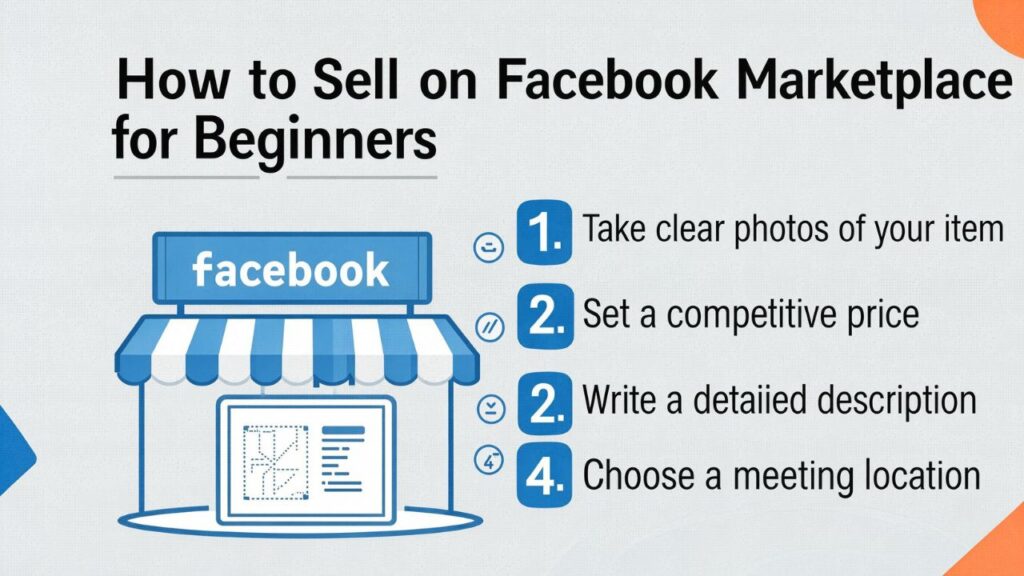
What Is Facebook Marketplace?
Facebook Marketplace is a buying and selling area inside Facebook where people can list items for sale, browse local products, message sellers, and arrange pickup, delivery, or shipping when available.
For many casual sellers, Marketplace is especially useful for selling everyday items such as:
- Furniture
- Electronics
- Clothing
- Baby gear
- Sports equipment
- Home decor
- Tools
- Appliances
- Books
- Toys
- Vehicles and parts, where allowed
Unlike a traditional e-commerce store, Marketplace is often built around local buying and selling. A buyer finds your item, sends you a message, asks questions, and either meets locally or completes a shipping-based purchase if that option is available on your account and listing type.
In the United States, Facebook Marketplace is available to adults with active Facebook accounts, and Meta’s rules may vary by region, category, account status, and listing type. You should also remember that every listing must follow Meta’s Commerce Policies and applicable local laws.
This article is for general educational purposes only. It is not legal, tax, or financial advice. Selling rules, platform fees, tax reporting requirements, and local regulations can change, so check the latest official details before making decisions.
Is Facebook Marketplace Good for Beginners?
For many first-time sellers, Marketplace is one of the easiest places to start because the setup is simple and the audience is already built in. You do not need to create a standalone website, learn advanced shipping systems, or pay upfront listing fees for most local sales.
That said, it is not perfect for every seller or every item.
Facebook Marketplace Is Best For
Marketplace is often a good fit if you want to:
- Declutter your home
- Sell used items locally
- Make extra cash from things you already own
- Test a small reselling side hustle
- Avoid complex store setup
- Sell bulky items that are hard to ship
- Reach nearby buyers quickly
A beginner selling a dining table, treadmill, bicycle, or kids’ outdoor playset may have a better experience selling locally than trying to ship the item through a national marketplace.
Facebook Marketplace May Not Be Best For
Marketplace may not be ideal if you:
- Want a fully automated online store
- Do not want to message buyers directly
- Are uncomfortable with local meetups
- Sell items that require strict compliance review
- Need built-in business tools, inventory systems, or advanced analytics
- Prefer fixed-price checkout without negotiation
Marketplace can work well, but it requires communication. Buyers may ask questions, negotiate, miss appointments, or stop replying. Beginners should treat that as part of the process rather than a personal rejection.
Local Pickup vs. Shipping: Which Should Beginners Choose?
Many beginners should start with local pickup because it is simpler. You list the item, agree on a price, meet the buyer in a safe location, receive payment, and mark the item as sold.
Shipping can expand your buyer pool, but it also adds packaging, tracking, possible fees, payout timing, and return or dispute considerations.
| Selling Method | Best For | Main Benefits | Possible Drawbacks |
|---|---|---|---|
| Local pickup | Furniture, appliances, bikes, tools, bulky items | Simple, fast, no packing required | Requires safe meetup planning |
| Door pickup | Large items, porch pickup, low-cost goods | Convenient for seller | More privacy and payment risk |
| Shipping | Small items, collectibles, clothing, accessories | Reaches more buyers | Requires packing, tracking, and fee awareness |
| Buy-and-sell groups | Niche items, local communities | Targeted audiences | Group rules vary |
If you are brand new, start with one or two local items. Once you understand messages, pricing, and buyer behavior, you can consider shipping smaller items.
Step 1: Choose the Right Item to Sell First
Your first listing should be simple, legal, easy to describe, and likely to attract buyers. Do not start with a complicated item that requires warranties, installation, repair knowledge, or detailed technical support.
Good first items often include:
- Small furniture in good condition
- Working household appliances
- Kids’ toys and baby gear
- Lamps and home decor
- Exercise equipment
- Tools
- Bookshelves
- Bicycles
- Video games
- Clean clothing bundles
Avoid starting with items that are broken, heavily damaged, missing important parts, or difficult to verify. You can sell imperfect items later, but beginners usually do better with clean, working products that are easy to photograph and explain.
Check Whether the Item Is Allowed
Before listing anything, confirm that the item is allowed under Marketplace rules. Items such as weapons, drugs, recalled products, counterfeit goods, certain animals, adult products, and other restricted categories may not be allowed.
A simple rule: if the item is regulated, unsafe, recalled, age-restricted, medical, counterfeit, or questionable, check the current policy before listing it.
This matters because listings can be rejected, removed, or hidden if they do not follow platform rules. Repeated violations may also affect your ability to sell.
Step 2: Clean, Test, and Prepare the Item
Presentation matters. Buyers are more likely to message when an item looks clean, cared for, and accurately represented.
Before taking photos:
- Wipe down surfaces
- Remove dust, stickers, pet hair, and stains if possible
- Test electronics and appliances
- Gather accessories, cords, manuals, or missing parts
- Measure furniture and large items
- Note flaws honestly
- Make sure the item is ready for pickup
For example, if you are selling a coffee table, clean the top, tighten loose screws, measure the length and width, and photograph any scratches. If you are selling a blender, plug it in, confirm it works, and include a photo of all included parts.
A clean item with an honest description often sells faster than a messy item with a vague listing.
Step 3: Research a Fair Price
Pricing is one of the biggest beginner challenges. Price too high, and buyers ignore your listing. Price too low, and you may lose money or attract bargain hunters who assume something is wrong.
Start by searching Marketplace for similar items in your area. Look at:
- Brand
- Condition
- Age
- Size
- Included accessories
- Original price
- Current demand
- How long similar listings appear to stay active
A practical beginner pricing method is to list used items at roughly 40% to 70% of the original retail price, depending on condition and demand. Highly desirable brands, newer items, and hard-to-find products may sell for more. Common items, damaged items, or bulky items may need a lower price.
Pricing Examples
A $300 desk in good condition might list for $125 to $175.
A $900 sofa with visible wear might list for $250 to $450, depending on brand, style, and local demand.
A $60 baby swing in clean, working condition might list for $25 to $40.
A $500 treadmill may sell for much less if it is heavy, older, or difficult to move.
These are not fixed rules. They are starting points. Local demand matters more than what you personally paid.
Should You Allow Negotiation?
Many Marketplace buyers expect some negotiation. You can build a little room into your price, but avoid inflating it so much that the listing looks unreasonable.
For example, if you want $80, listing at $95 may give you room to accept $80. Listing at $160 for an item worth $80 may cause serious buyers to scroll past.
Use phrases such as:
- “Price is firm.”
- “Open to reasonable offers.”
- “Pickup only.”
- “Cash preferred.”
- “Will consider offers after 48 hours.”
Clear pricing expectations reduce wasted messages.
Step 4: Take Photos That Make Buyers Trust the Listing
Photos are the first thing buyers notice. Good photos do not need to look professional, but they should be clear, bright, and honest.
Take photos in natural light when possible. Move clutter out of the frame. Show the full item from multiple angles. Include close-ups of labels, brand names, serial plates when appropriate, accessories, and flaws.
A strong listing usually includes:
- One clear main photo
- Front, side, and back views
- Close-up of important details
- Photo of included accessories
- Photo of any damage
- Size reference, if helpful
Do not use only stock photos. Buyers want to see the real item. If you include a stock image for reference, make sure your actual photos are also included and clearly show the condition.
Photo Tips by Item Type
For furniture, photograph it in a clean room and include measurements.
For electronics, show the device powered on.
For clothing, use a hanger, mannequin, or clean flat-lay photo.
For baby gear, show safety labels and included parts where relevant.
For tools, show the brand, model, and condition.
For bundles, lay everything out clearly so buyers can see what is included.
Good photos answer questions before the buyer has to ask.
Step 5: Write a Clear Marketplace Listing Title
A strong title tells buyers what the item is, what brand it is, and one key detail.
Weak title:
“Chair”
Better title:
“Gray Upholstered Accent Chair – Good Condition”
Weak title:
“Phone for sale”
Better title:
“iPhone 13 128GB Unlocked – Blue – Good Condition”
Weak title:
“Baby stuff”
Better title:
“Baby Clothes Bundle 6-12 Months – 40 Pieces”
Use simple words buyers would naturally search for. Include brand, size, color, material, model, and condition when relevant.
A practical title formula is:
Item + Brand + Size/Model + Condition + Key Feature
Examples:
- “IKEA Hemnes 6-Drawer Dresser – White – Good Condition”
- “Trek Mountain Bike 26-Inch – Recently Tuned”
- “KitchenAid Stand Mixer 5 Quart – Red – Works Great”
- “Pottery Barn Table Lamp Pair – Neutral Shade”
- “Toddler Bed Frame with Mattress – Pickup Only”
This is where sell on Facebook Marketplace basics become more than just posting an item. A strong title helps the right buyer understand the offer quickly.
Step 6: Write a Description That Answers Buyer Questions
Your description should be honest, specific, and easy to skim. Beginners often write too little, which leads to repetitive messages. Others write too much, which makes the listing hard to read.
A good description includes:
- What the item is
- Brand or model
- Condition
- Dimensions
- What is included
- Any flaws
- Pickup location area
- Payment preference
- Whether the price is firm or negotiable
Simple Listing Description Template
Use this beginner-friendly template:
“Selling a [item name] in [condition]. Brand/model is [brand/model, if known]. Measures approximately [dimensions]. Includes [accessories or parts]. Works well and has been cleaned. There are [mention flaws honestly]. Pickup near [general area]. [Cash/Venmo/Zelle/etc.] preferred. Price is [firm/open to reasonable offers].”
Example Description for Furniture
“Selling a white 6-drawer dresser in good used condition. Measures 54 inches wide, 33 inches tall, and 18 inches deep. Drawers open smoothly. There are a few small marks on the top, shown in the photos. Pickup near West Plano. Buyer must be able to load and transport. Price is firm.”
Example Description for Electronics
“Selling an unlocked iPhone 13 with 128GB storage in blue. Phone powers on, charges, and works normally. Screen has minor surface scratches but no cracks. Includes charging cable only. Battery health is shown in the photos. Pickup near downtown Phoenix. Cash preferred.”
Honesty builds trust. If there is a scratch, dent, missing cord, odor, pet exposure, or repair history, say so. Surprises create conflict.
Step 7: Choose the Right Category and Listing Details
Facebook Marketplace asks for category, condition, price, location, and other details depending on the item. Fill out as many relevant fields as possible.
Choose the most accurate category because it helps buyers understand what you are selling and may affect where the item appears. A baby stroller belongs in baby and kids, not general household goods. A dining table belongs in furniture, not home decor.
Useful details may include:
- Brand
- Color
- Size
- Material
- Condition
- Pickup area
- Delivery availability
- Shipping availability
- Item dimensions
Keep your location general. You do not need to put your exact home address in the listing. Use a nearby neighborhood, town, or public landmark area instead.
Step 8: Publish the Listing and Watch Early Activity
After publishing, keep an eye on messages. The first few hours can matter because interested buyers may ask quick questions or request pickup times.
Respond politely and directly. You do not need to be available every minute, but slow replies can cause buyers to move on.
Good beginner responses include:
- “Yes, it is still available.”
- “Pickup is near [general area].”
- “The dimensions are listed, but I can confirm them for you.”
- “I can meet today between 5 and 7 p.m.”
- “I’m not holding without a confirmed pickup time.”
- “The lowest I can do is $60.”
Avoid giving out personal information too early. Keep communication in Messenger when possible, especially with new buyers.
Step 9: Handle Buyer Messages Without Getting Overwhelmed
New sellers often get excited when messages arrive, then frustrated when buyers disappear. This is normal. Marketplace has many casual browsers.
Common buyer messages include:
- “Is this available?”
- “What’s your lowest?”
- “Can you deliver?”
- “Will you hold it?”
- “Can I pick up today?”
- “Does it work?”
- “Any damage?”
Create short saved responses on your phone to save time.
How to Respond to “Is This Available?”
Try:
“Yes, it’s available. Pickup is near [area]. When would you like to come by?”
This moves the conversation forward.
How to Respond to Low Offers
Try:
“Thanks for the offer. I can do $75, but I’m not able to go lower right now.”
Or:
“I’ll keep your offer in mind if it doesn’t sell this week.”
Stay polite. You do not need to argue.
How to Handle Holds
Beginners often lose sales by holding items too long for buyers who never show up. A fair policy is:
“I can hold it once we agree on a pickup time. If plans change, I’ll move to the next interested buyer.”
For high-demand items, you may prefer:
“First pickup gets it.”
Be clear and consistent.
Step 10: Plan a Safe Pickup or Meetup
Safety should be part of every Marketplace sale. For small and medium items, consider meeting in a public place during daylight hours. Many police departments and community centers offer safe exchange areas, but availability varies by location.
For larger items that require home pickup, take extra care:
- Have another adult present if possible
- Move the item to a garage, porch, driveway, or entry area
- Avoid letting strangers walk through your home
- Schedule during daylight
- Confirm the buyer’s arrival time
- Keep pets and children away from the exchange area
- Trust your instincts if something feels wrong
Never feel pressured to meet late at night, accept unusual payment arrangements, or continue a transaction that feels unsafe.
Step 11: Choose a Payment Method Carefully
For local sales, cash is simple because it is immediate and easy to verify. Digital payment apps can be convenient, but scams can happen when buyers send fake payment screenshots, request refunds, or claim they overpaid.
Common payment options include:
- Cash
- Venmo
- PayPal
- Zelle
- Cash App
- Marketplace checkout, where available for shipping listings
Before handing over an item, confirm that payment has actually arrived in your account. Do not rely only on screenshots or emails. Be especially careful with buyers who say they sent extra money and need you to refund the difference.
For higher-value items, consider meeting at a bank or using a safer payment arrangement. If a buyer’s payment behavior feels strange, stop the transaction.
Step 12: Mark the Item as Sold
Once the item is paid for and picked up, mark it as sold. This helps you avoid more messages and keeps your seller profile cleaner.
You can also delete old listings that are no longer relevant. If you plan to sell similar items later, review what worked:
- Did the item sell quickly?
- Did buyers ask the same question repeatedly?
- Was the price too high or too low?
- Were the photos clear enough?
- Did the description include enough detail?
Every listing teaches you something. Your second and third listings will usually be easier.
How to Sell on Facebook Marketplace for Beginners With Shipping
Shipping can be useful for smaller items such as clothing, collectibles, accessories, shoes, books, and electronics. It is not always available for every seller, item, or location, and platform rules can change.
When using shipping, pay attention to:
- Shipping eligibility
- Item weight and dimensions
- Packaging cost
- Shipping label requirements
- Tracking
- Seller fees
- Payout timing
- Buyer disputes
- Return expectations
- Tax forms, where applicable
At the time of writing, Meta’s Help Center states that a selling fee may be deducted from payouts for items sold with shipping and checkout. Because fees and payout rules can change, always check the current Marketplace shipping details before listing.
Beginner Shipping Checklist
Before offering shipping, make sure you can:
- Package the item securely
- Weigh and measure the package
- Ship within the required timeframe
- Provide tracking
- Keep proof of shipment
- Understand the fee deducted from your payout
- Handle buyer questions after purchase
Shipping is not difficult, but it adds responsibility. If you are brand new, local pickup is often the easiest first step.
What Sells Well on Facebook Marketplace?
What sells depends on your area, season, price, and item condition. Still, some categories tend to attract steady interest.
| Category | Why It Often Sells | Beginner Tip |
|---|---|---|
| Furniture | Local buyers want affordable home items | Include measurements and pickup details |
| Baby gear | Parents often look for budget-friendly items | Check safety and recall status first |
| Tools | Useful and durable | Mention brand, power source, and condition |
| Electronics | High demand when priced fairly | Show the item working |
| Fitness equipment | Bulky items are easier to sell locally | Be honest about weight and transport needs |
| Home decor | Easy impulse purchases | Style photos neatly |
| Clothing bundles | Good for kids’ sizes and seasonal lots | Sell in grouped lots, not single low-value pieces |
| Outdoor items | Seasonal demand can be strong | List before peak season |
Season matters. Patio furniture may sell better in spring. Space heaters may sell better in fall. Dorm furniture may move quickly before the school year. Holiday decor often performs best before the holiday, not after it.
Items Beginners Should Be Careful Selling
Some items require extra caution because of safety, policy, condition, or buyer expectations.
Be careful with:
- Car seats
- Cribs
- Helmets
- Medical devices
- Recalled products
- High-value electronics
- Designer goods
- Tickets
- Gift cards
- Supplements
- Cosmetics
- Weapons or weapon accessories
- Alcohol, tobacco, or regulated goods
Even if an item seems harmless, it may be restricted or create liability concerns. For baby and child products, always check recall status. For branded luxury goods, make sure the item is authentic and that you can describe it accurately.
When in doubt, do not list it until you confirm it is allowed.
Common Facebook Marketplace Scams Beginners Should Know
Most Marketplace transactions are ordinary, but scams do happen. Beginners are often targeted because they may not know common warning signs.
Watch out for:
- Buyers who want to move the conversation off Facebook immediately
- Fake payment confirmation emails
- Overpayment scams
- Requests for verification codes
- Gift card payment requests
- Buyers who send a “courier” with unusual payment instructions
- Links asking you to log in
- Urgent pressure to ship before payment clears
- Buyers who refuse to answer basic questions
- Profiles that look newly created or suspicious
A real buyer usually wants to know practical details: condition, pickup time, location, measurements, or whether the item works. A scammer often focuses on payment tricks, urgency, or moving you away from the normal process.
Beginner Mistakes to Avoid
Many first-time sellers make the same avoidable mistakes. Fixing these can help your listings look more trustworthy and reduce wasted time.
Using Poor Photos
Dark, blurry, cluttered photos make buyers hesitate. Clean the item, use natural light, and show multiple angles.
Writing a One-Line Description
“Good condition, must go” is not enough for most buyers. Include size, condition, brand, flaws, and pickup details.
Overpricing Based on Emotion
What you paid matters less than what buyers are willing to pay now. Sentimental value does not transfer to the buyer.
Holding Items Too Long
A buyer who says “I’ll come next week” may never show up. Use short holds or first-confirmed-pickup rules.
Ignoring Safety
Do not meet in unsafe locations, invite strangers deep into your home, or accept suspicious payment arrangements.
Hiding Flaws
If the item has damage, show it. Honest listings reduce conflict and help buyers trust you.
Forgetting Measurements
For furniture, rugs, appliances, and storage items, measurements are essential. Without them, buyers may move on.
Taking Things Personally
Low offers, ghosting, and no-shows happen. Stay professional and move to the next buyer.
How to Make Your Listing Stand Out
Good listings are clear, complete, and easy to trust. You do not need fancy language. You need useful information.
Use these Facebook Marketplace selling tips to improve your results:
- Put the most important details in the first two lines
- Use the actual brand name when known
- Add dimensions for anything size-dependent
- Photograph flaws clearly
- Price competitively
- Reply quickly to serious buyers
- Refresh stale listings when appropriate
- List seasonal items before demand peaks
- Bundle lower-value items
- Be polite but firm with negotiations
A strong listing does not just attract more messages. It attracts better messages from buyers who already understand what you are offering.
A Simple First-Sale Example
Imagine you want to sell a small dining table with four chairs.
First, you clean the table and tighten one loose chair screw. Then you measure the table: 48 inches long, 30 inches wide, and 30 inches tall. You check similar listings and see that comparable sets are listed between $120 and $220.
You choose a price of $160 because the set is in good condition but not perfect.
Your title:
“Small Dining Table with 4 Chairs – Good Condition”
Your description:
“Selling a small dining table with four matching chairs. Table measures 48 x 30 x 30 inches. Good used condition with a few small surface scratches shown in photos. Chairs are sturdy. Pickup near North Austin. Buyer must be able to load and transport. Open to reasonable offers.”
You take eight photos: front, side, tabletop, chairs, scratches, full set, legs, and a close-up of the finish.
A buyer asks if it is available. You reply:
“Yes, it’s available. Pickup is near North Austin. I’m available today after 5 p.m. or tomorrow morning.”
The buyer offers $140. You accept because it is close to your target price. You schedule pickup in daylight, have the table near the garage, receive payment, help answer a loading question, and mark the listing as sold.
That is a successful beginner sale: clear item, fair price, safe pickup, honest description, and simple communication.
Cost, Fees, and Tax Considerations
For many local transactions, listing an item on Marketplace does not involve an upfront listing fee. However, if you use shipping and checkout, seller fees may apply, and payout timing can vary.
You should also think about costs such as:
- Cleaning supplies
- Packing materials
- Shipping boxes
- Bubble wrap or paper
- Labels
- Fuel for meetups or delivery
- Time spent messaging buyers
- Possible platform fees for shipped orders
Taxes can depend on whether you are selling personal used items at a loss, regularly reselling for profit, or operating like a business. Payment platforms and marketplaces may issue tax forms depending on current reporting rules and your activity. If you sell regularly or earn meaningful income, consider speaking with a qualified tax professional.
Beginners often ignore these details because they are “just selling a few things.” That may be fine for casual decluttering, but if you turn Marketplace into a side hustle, track your sales, costs, and profits from the beginning.
Should You Deliver Items to Buyers?
Delivery can help close a sale, especially for furniture or large items, but it adds time, fuel cost, and safety considerations.
If you offer delivery, set clear terms:
- Delivery area
- Delivery fee
- Payment timing
- Whether you help carry the item
- Whether stairs are included
- Whether the buyer must be present
- What happens if the buyer cancels
For example:
“Delivery available within 10 miles for an extra $25. Buyer must pay before unloading.”
Do not offer free delivery unless the item price justifies it. Your time and fuel have value.
When to Lower the Price
If your item gets views but no messages, the price may be too high, the photos may be weak, or the description may be unclear.
Consider lowering the price if:
- Similar items are cheaper
- You have no serious messages after several days
- The item is seasonal and demand is fading
- You need it gone quickly
- Buyers repeatedly offer much less
- The item has flaws that reduce value
A small price drop can renew interest. Instead of dropping from $100 to $40 immediately, try $90 or $80 first. If you mainly want the item gone, price it aggressively from the start.
How to Build Trust as a New Seller
When you are new, buyers may be cautious. You can build trust by being clear, polite, and consistent.
Trust signals include:
- Real photos
- Complete descriptions
- Honest flaw disclosure
- Reasonable pricing
- Prompt replies
- Public meetup options
- A normal communication style
- Marking items sold after transactions
- Avoiding pressure tactics
Do not exaggerate. Phrases like “perfect condition” or “brand new” should only be used when they are accurate. “Good used condition” is often more believable and safer.
Practical First-Week Plan for Beginners
If you want a simple way to start, use this plan.
Day 1: Choose three items from your home that are clean, allowed, and easy to sell.
Day 2: Research similar listings and decide prices.
Day 3: Clean the items and take photos.
Day 4: Write titles and descriptions using the templates above.
Day 5: Publish the listings and respond to messages.
Day 6: Adjust pricing or photos if needed.
Day 7: Complete pickups, mark sold items, and review what worked.
Starting with three listings gives you practice without becoming overwhelmed. Once you complete your first sale, the process feels much less intimidating.
Alternatives to Facebook Marketplace
Marketplace is useful, but it is not your only option. Depending on what you sell, other platforms may work better.
Consider:
- eBay for collectibles, electronics, and shippable items
- Craigslist for local furniture, vehicles, and large items
- OfferUp for local secondhand sales
- Poshmark for clothing and accessories
- Mercari for small shippable items
- Nextdoor for neighborhood-based selling
- Local consignment stores for furniture or clothing
- Garage sales for bulk decluttering
You do not need to use every platform. For beginners, one platform is enough. If an item does not sell after a reasonable amount of time, cross-listing may help.
Beginner Seller Checklist
Before publishing your listing, review this checklist:
- Item is allowed under current rules
- Item is clean and ready to sell
- Item has been tested, if applicable
- Price is based on local comparisons
- Photos are bright and clear
- Flaws are shown and described
- Title includes key details
- Description includes size, condition, and pickup area
- Payment preference is clear
- Meetup plan is safe
- You are ready to respond to messages
- You know your lowest acceptable price
This simple checklist can prevent most beginner problems before they happen.
FAQ
Do I need a business account to sell on Facebook Marketplace?
No, many people sell personal used items from a regular Facebook account. However, if you sell frequently, buy inventory for resale, or operate like a business, you may need to think more carefully about taxes, records, policies, and local business rules.
Is it free to sell on Facebook Marketplace?
Local listings often do not have an upfront listing fee, but fees may apply for shipped orders using checkout. Because fees can change, check the current Marketplace selling and shipping details before relying on any amount.
What is the safest way to get paid?
For local sales, cash is often simple. Digital payment apps can work, but confirm the money is actually in your account before handing over the item. Be cautious with fake payment emails, overpayment stories, and screenshots that do not match your real account balance.
Should I give buyers my address?
For small items, a public meetup is often safer. For large items that require home pickup, consider using a garage, driveway, porch, or entry area instead of inviting buyers inside. Share your exact address only after you have a confirmed pickup time and feel comfortable with the buyer.
Why is no one messaging me about my listing?
The most common reasons are price, photos, item demand, location, or missing details. Compare similar listings, improve the main photo, add measurements, and consider lowering the price if the item has been sitting for several days.
How long should I hold an item for a buyer?
Beginners should avoid long holds. A practical approach is to hold an item only after agreeing on a specific pickup time. For popular items, “first confirmed pickup” is usually safer than holding for days.
Can I sell damaged items?
Yes, if the item is allowed and you clearly disclose the damage. Show flaws in photos and describe them plainly. Some buyers are happy to repair or repurpose items if the price is fair.
What should I do after the item sells?
Confirm payment, complete the pickup or shipment, mark the item as sold, and remove or update any duplicate listings. Then review what worked so your next listing is easier and faster.
Conclusion
Learning how to sell on Facebook Marketplace for beginners is mostly about getting the basics right: choose a good item, price it fairly, take honest photos, write a clear description, communicate politely, and protect your safety during payment and pickup.
You do not need to be a professional reseller to make your first sale. Start with one clean, useful item you no longer need. Create a listing that answers the buyer’s obvious questions. Stay calm through negotiations, avoid suspicious payment requests, and keep the process simple.
Once you complete your first sale, Marketplace becomes much less confusing. From there, you can keep decluttering, improve your listings, and decide whether casual selling or a small resale side hustle makes sense for you.