

Introduction
A basement can feel dark, cold, and forgotten until the ceiling is handled the right way. That is why basement ceiling ideas matter so much when you are planning a finished basement.
The ceiling affects height, lighting, sound, warmth, style, access to pipes, and even how comfortable the room feels. A great basement ceiling can make the space feel like a real part of the home instead of an unfinished storage area.
However, basements come with challenges. Ductwork, pipes, beams, moisture, wiring, and low headroom can all limit your options. The good news is that there is usually a smart ceiling solution for every budget and style.
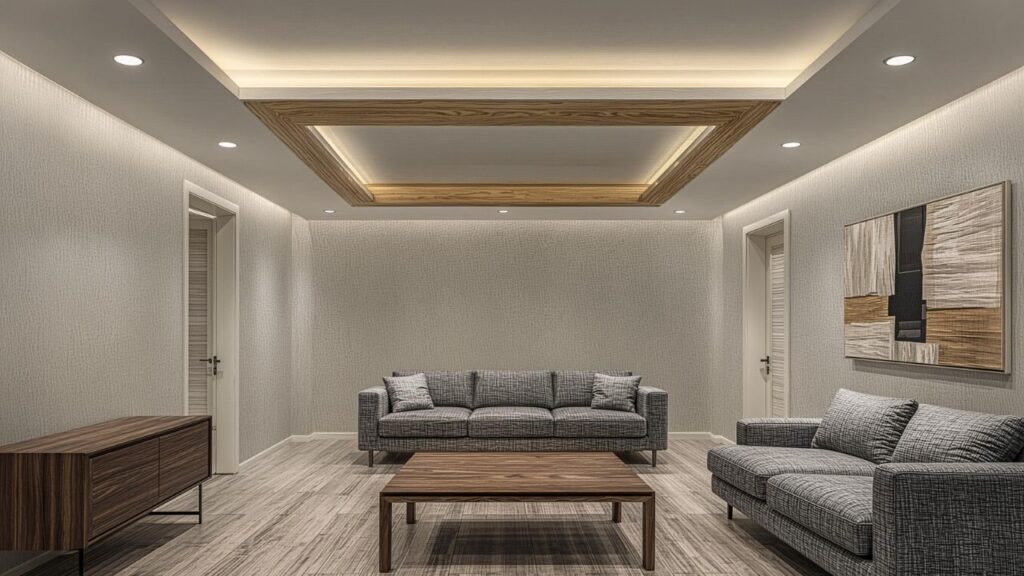
Table of Contents
- What Makes Basement Ceilings Different?
- Best Basement Ceiling Ideas
- Drywall Basement Ceiling
- Drop Ceiling Basement Ideas
- Exposed Basement Ceiling
- Wood and Plank Ceiling Options
- Low Basement Ceiling Ideas
- Lighting Ideas for Basement Ceilings
- Cost and Code Considerations
- Common Mistakes to Avoid
- FAQs
- Conclusion
What Makes Basement Ceilings Different?
Basement ceilings are different from main-floor ceilings because they often hide important home systems. You may have plumbing lines, HVAC ducts, electrical wiring, beams, joists, gas lines, and shutoff valves above your head.
That means the best ceiling is not only about looks. It must also allow safe access, meet local building rules, handle moisture, and preserve enough headroom.
Many building references based on the International Residential Code note that habitable basement areas generally need at least 7 feet of finished ceiling height. Other basement areas may allow 6 feet 8 inches, while beams, ducts, and similar obstructions may project lower in certain cases. Always confirm with your local building department before finishing the space.
Best Basement Ceiling Ideas
The best basement ceiling ideas depend on your room use, budget, ceiling height, and access needs.
| Ceiling Option | Best For | Main Benefit | Watch Out For |
|---|---|---|---|
| Drywall ceiling | Polished finished basements | Clean, home-like look | Harder access to pipes and wires |
| Drop ceiling | Utility-heavy basements | Easy access | Can reduce headroom |
| Exposed painted ceiling | Low ceilings and modern spaces | Saves height | Needs careful prep |
| Wood planks | Cozy media rooms or guest suites | Warm texture | Can cost more |
| Beadboard ceiling | Cottage or classic basements | Decorative charm | Needs moisture planning |
| Acoustic tiles | Home theaters or offices | Better sound control | Style varies |
| Metal ceiling tiles | Industrial or vintage spaces | Bold design | Can feel busy |
| Coffered-look ceiling | Larger basements | High-end appearance | Needs enough height |
| A basement used as a family room may need a soft, finished look. A basement gym may work better with an exposed painted ceiling. A home theater may need acoustic panels or tiles. |
Drywall Basement Ceiling
A drywall ceiling is one of the most polished basement ceiling ideas because it makes the basement feel like the rest of the home.
What It Is
A drywall basement ceiling uses gypsum panels attached to framing or ceiling joists, then taped, mudded, sanded, primed, and painted.
Best For
Drywall works well for:
- Finished family rooms
- Basement bedrooms
- Guest suites
- Home offices
- Playrooms
- Clean modern basements
Pros
- Smooth and finished appearance
- Works with recessed lighting
- Can be painted any color
- Feels like a normal room
- Good for resale appeal
Cons
- Harder to access plumbing and wiring
- May need access panels
- Can be damaged by leaks
- More labor-intensive than painting exposed joists
HomeAdvisor lists average ceiling installation at around $1,600, while drywall installation costs vary by room size, labor, removal, texture, insulation, and paint needs.
Smart Tip
If you choose drywall, plan access panels for shutoff valves, junction boxes, cleanouts, and anything that may need future maintenance.
Drop Ceiling Basement Ideas
A drop ceiling, also called a suspended ceiling, is one of the most practical basement ceiling ideas for homes with pipes, wires, and ducts overhead.
What It Is
A drop ceiling uses a metal grid system with removable ceiling tiles. The tiles sit below the joists and can be lifted out when you need access.
Best For
Drop ceilings work well for:
- Basements with many utilities
- Rental units
- Laundry areas
- Older homes
- Home offices
- Utility rooms
- Budget-conscious remodels
Pros
- Easy access to plumbing and wiring
- Faster repair if one tile is damaged
- Good acoustic tile options
- Many modern tile styles available
- Helpful in older basements
Cons
- Reduces ceiling height
- Cheap tiles can look dated
- Grid lines may not suit every design
- Moisture can damage some tile types
HomeAdvisor reports drop ceiling installation often ranges from about $4 to $20 per square foot, including materials and labor, with average project costs around $1,938 depending on size, tile type, and location.
Design Upgrade
Choose smooth white tiles, black grid systems, wood-look tiles, or acoustic panels instead of old speckled office-style tiles.
Exposed Basement Ceiling
An exposed ceiling can look surprisingly stylish when done with care.
What It Is
An exposed basement ceiling leaves joists, pipes, ducts, and wiring visible. Everything is usually painted one color to make the ceiling feel intentional.
Best For
This option works well for:
- Low basements
- Industrial-style rooms
- Home gyms
- Workshops
- Game rooms
- Budget remodels
- Creative studios
Pros
- Preserves maximum height
- Usually less expensive than drywall or drop ceilings
- Easy access to utilities
- Can look modern and bold
- Works well with black, white, or charcoal paint
Cons
- Less sound control
- Requires careful cleaning before painting
- Exposed pipes and ducts remain visible
- Spraying paint can be messy
Best Colors
Use black for a dramatic theater-like feel. Use white to brighten the basement. Use charcoal for a softer industrial look.
Wood and Plank Ceiling Options
Wood ceilings bring warmth to a basement, especially if the space feels cold or plain.
Tongue-and-Groove Wood
Tongue-and-groove planks create a cozy cabin or cottage feel. They work beautifully in basement lounges, guest rooms, and rustic home bars.
Beadboard Ceiling
Beadboard gives a classic look. It pairs well with white walls, soft lighting, and cottage-style decor.
Faux Wood Panels
Faux wood panels can give the look of real wood with less maintenance. Choose moisture-resistant products for basements.
Shiplap Ceiling
A shiplap ceiling adds clean lines and texture. It can make a basement feel designed without looking too formal.
HomeAdvisor notes that tongue-and-groove wood paneling can cost around $1 to $3 per square foot for material in some basement finishing contexts, though total cost depends on labor, framing, finish, and project conditions.
Low Basement Ceiling Ideas
Low ceilings are one of the biggest basement problems. The wrong ceiling can make the room feel tight, heavy, and uncomfortable.
Use an Exposed Painted Ceiling
If you need every inch, an exposed ceiling may be better than a drop ceiling.
Paint the Ceiling Light
White, soft gray, or warm off-white can reflect more light and make the ceiling feel higher.
Use Recessed or Flush Lighting
Avoid hanging lights in low basements. Use recessed lights, wafer lights, or low-profile flush fixtures.
Keep Walls and Ceiling Similar
A low-contrast palette can blur edges and make the room feel more open.
Avoid Heavy Crown Molding
Large trim can make a low ceiling feel even lower.
Lighting Ideas for Basement Ceilings
Lighting can completely change how a basement feels.
Good lighting choices include:
- Recessed LED lights
- Low-profile wafer lights
- Track lighting
- Cove lighting
- Wall sconces
- LED strip lighting
- Pendant lights only over bars or tables
- Dimmable fixtures for media rooms
Use warm light for cozy spaces and brighter neutral light for gyms, offices, and laundry rooms. A basement with no natural light needs layered lighting, not one harsh ceiling fixture in the center.
Cost and Code Considerations
Before choosing from different basement ceiling ideas, check height, access, moisture, and local code.
| Factor | Why It Matters |
|---|---|
| Ceiling height | Finished basements often need minimum headroom |
| Ducts and beams | These may lower usable clearance |
| Plumbing access | Future leaks or repairs may require access |
| Electrical junction boxes | Must remain accessible where required |
| Moisture | Basements need moisture-aware materials |
| Lighting | Fixture depth affects headroom |
| Sound control | Bedrooms, offices, and theaters may need acoustic planning |
| Permits | Finished living areas may require inspection |
| For finished habitable basement space, code guidance commonly points to 7 feet of minimum ceiling height, with some exceptions for non-habitable areas and obstructions. Local rules can vary, so treat code research as the starting point, not the final approval. |
Common Mistakes to Avoid
Covering Important Access Points
Do not permanently cover shutoff valves, drain cleanouts, junction boxes, or mechanical access areas.
Choosing a Drop Ceiling in a Very Low Basement
Drop ceilings are practical, but they can steal headroom. In a low basement, that may make the room feel cramped.
Ignoring Moisture
Basements can have humidity or leak issues. Fix moisture problems before installing drywall, wood, or ceiling tiles.
Using Too Few Lights
Basements need more thoughtful lighting than upstairs rooms. Dark corners make the whole space feel unfinished.
Forgetting Sound
If the basement is under bedrooms or living areas, sound transfer can become annoying. Acoustic tiles, insulation, and rugs can help.
Painting Without Cleaning
An exposed ceiling must be cleaned before paint. Dust, cobwebs, and old residue can ruin the finish.
Personal Background and Financial Insights
This topic is not about a public person, so personal background and net worth are not applicable.
However, the “career journey” of basement ceiling design is interesting. In older homes, basement ceilings were often left unfinished because the basement was used for storage, laundry, or mechanical systems. As homeowners began turning basements into family rooms, home theaters, gyms, offices, and rental spaces, ceiling design became much more important.
Financially, a finished basement can add usable living space without building a full addition. The ceiling choice affects both the project cost and the finished feel. A clean drywall ceiling may improve the room’s resale appeal, while a drop ceiling may reduce future repair headaches. The smartest choice is the one that fits the home, not just the photo inspiration.
Basement Ceiling Ideas by Room Type
| Basement Room | Best Ceiling Choices |
|---|---|
| Family room | Drywall, wood planks, acoustic tiles |
| Home theater | Black exposed ceiling, acoustic drop ceiling |
| Gym | Exposed ceiling, moisture-resistant panels |
| Laundry room | Drop ceiling, exposed painted ceiling |
| Bedroom | Drywall with access panels |
| Home office | Drywall, acoustic tiles, wood accents |
| Playroom | Drywall or durable drop ceiling tiles |
| Bar area | Wood planks, tin tiles, drywall |
| A basement bedroom needs comfort and code planning. A utility room needs access. A home theater needs light control and sound control. One ceiling style does not have to cover the whole basement. |
FAQs
What is the best ceiling for a basement?
The best ceiling depends on your needs. Drywall looks the most finished, drop ceilings offer easy access, and exposed painted ceilings preserve the most height.
What are the cheapest basement ceiling ideas?
Painting an exposed ceiling is often one of the cheapest options. Basic drop ceiling tiles can also be affordable, depending on room size and material.
Is drywall or drop ceiling better for a basement?
Drywall looks cleaner and more permanent. A drop ceiling is better if you need regular access to pipes, ducts, or wiring.
Can I leave my basement ceiling exposed?
Yes, an exposed ceiling can work well, especially in low basements or industrial-style rooms. Clean and paint everything carefully for a finished look.
What color should I paint a basement ceiling?
White makes the room brighter. Black hides pipes and creates a cozy theater effect. Charcoal gives a softer modern look.
How do I make a low basement ceiling look higher?
Use light paint, low-profile lighting, simple walls, vertical design lines, and avoid bulky ceiling systems where possible.
Are drop ceilings outdated?
Not always. Old office-style tiles can look dated, but modern drop ceilings now come in smoother, cleaner, acoustic, wood-look, and decorative options.
Do basement ceilings need insulation?
Sometimes. Insulation can help with sound control and comfort, especially under bedrooms or main living areas.
Should I get a permit to finish a basement ceiling?
Many finished basement projects require permits, especially when adding living space, bedrooms, electrical work, or mechanical changes. Check with your local building department.
Conclusion
The best basement ceiling ideas balance style, comfort, access, height, and budget. A drywall ceiling can make the space feel polished. A drop ceiling can keep future repairs simple. An exposed painted ceiling can save height and create a modern look. Wood, beadboard, and acoustic panels can add warmth and function.
Before choosing, look at your basement honestly. Check the ducts, pipes, beams, moisture, lighting, and ceiling height. Then pick the ceiling that supports the way you actually plan to use the space.
A basement does not have to feel like a basement. With the right ceiling, it can become one of the most comfortable and useful rooms in the home.