Introduction
Open-plan homes feel bright, social, and modern — until everything starts blending together in a way that feels messy instead of intentional. If you’ve been wondering how to divide an open plan living room kitchen without making the space feel cramped, you’re definitely not alone. Many homeowners love the openness at first, but eventually realize they still crave structure, privacy, and visual balance.
The challenge with open layouts is that they remove natural boundaries. Cooking smells drift into lounging areas, television noise competes with dinner conversations, and furniture placement suddenly becomes surprisingly complicated. However, the beauty of open-plan design is flexibility. With the right layout techniques, you can create distinct “zones” while still preserving the spacious airy atmosphere that makes open living so appealing.
Interior designers often describe this process as “soft separation.” Instead of closing rooms off with walls, modern homes use furniture, lighting, textures, and architectural details to subtly define each space. And when done correctly, the result feels far more sophisticated than simply throwing a sofa into the middle of a room and hoping for the best.

Table of Contents
Why Open Plan Layouts Need Definition
Understanding Functional Zoning
Furniture Placement Strategies
Using Rugs to Divide Spaces
Kitchen Islands as Natural Dividers
Lighting Techniques for Open Plan Rooms
Creative Partition and Divider Ideas
Color Schemes and Visual Separation
Flooring Transitions That Work
Storage Solutions for Open Layouts
Small Space Open Plan Ideas
Common Mistakes to Avoid
Frequently Asked Questions
Conclusion
Why Open Plan Layouts Need Definition
Open-plan homes became popular because they encourage:
- Better natural light
- Easier social interaction
- Flexible layouts
- Spacious visual flow
However, without proper zoning, these spaces can quickly feel chaotic.

Lack of Structure Creates Visual Clutter
When the kitchen, dining, and living room all compete for attention, the entire area may feel disorganized even when technically clean.
Noise Travels More Easily
Open layouts naturally amplify:
- Television sounds
- Kitchen appliances
- Conversations
- Echoes
Dividing the space thoughtfully can help reduce sensory overload.
Distinct Zones Improve Functionality
People psychologically respond better to spaces with clear purposes. Defined areas improve comfort and daily routines.
Understanding Functional Zoning
The secret behind successfully learning how to divide an open plan living room kitchen is understanding zoning.
What Is Zoning?
Zoning means visually and functionally separating areas without fully closing them off.
In most open homes, common zones include:
- Cooking space
- Dining area
- Lounge area
- Workstation
- Reading nook
Why Zoning Feels More Comfortable
Humans naturally appreciate environments with structure. Defined zones create a sense of order while still maintaining openness.
Balance Is Essential
Too much separation can make the home feel fragmented. Too little creates visual confusion.

Furniture Placement Strategies
Furniture is one of the easiest and most effective tools for dividing open spaces.
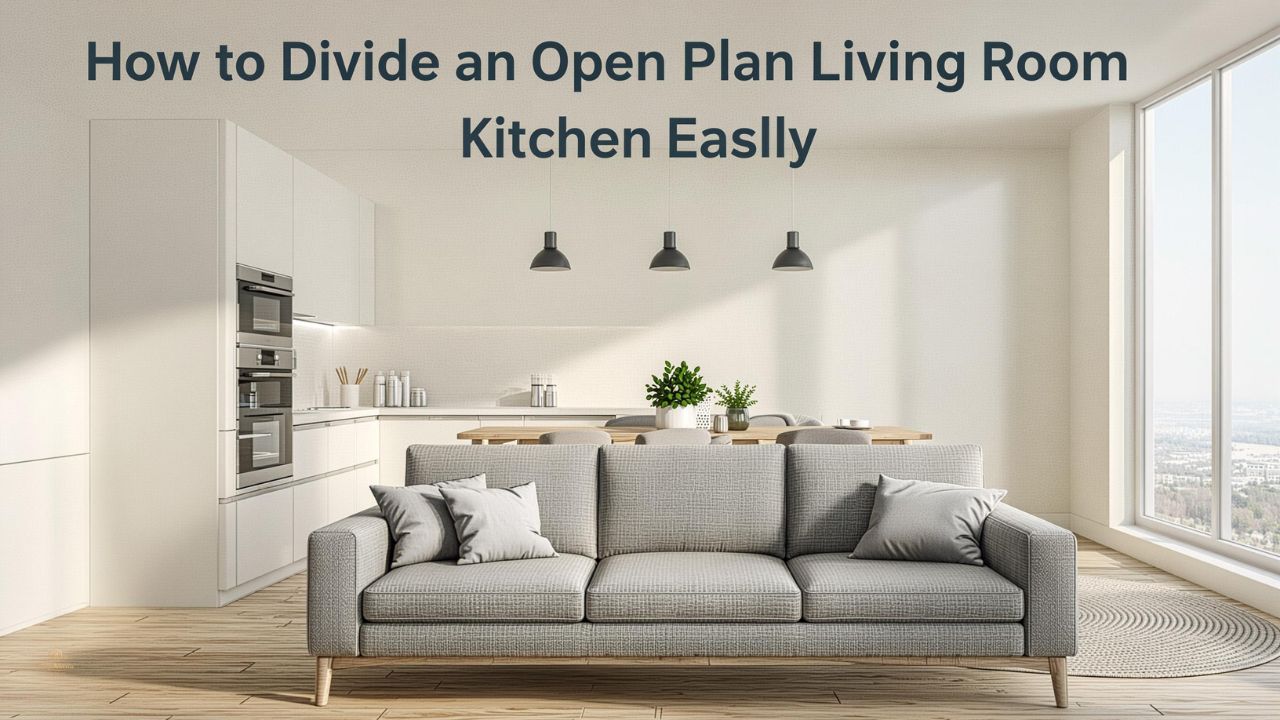
Use Sofas as Boundaries
Positioning a sofa with its back facing the kitchen creates a natural visual divider between living and cooking areas.
This technique:
- Defines the lounge space
- Creates direction
- Improves traffic flow
Add Console Tables Behind Sofas
A slim console table reinforces separation while adding:
- Storage
- Decor opportunities
- Lighting space
Anchor Spaces With Furniture Groupings
Instead of spreading furniture randomly, group pieces intentionally.
For example:
- Sofa + coffee table + rug = living zone
- Dining table + pendant light = dining zone

Avoid Pushing Everything Against Walls
Ironically, leaving space around furniture often makes open layouts feel larger and more balanced.
Using Rugs to Divide Spaces
Rugs are one of the simplest zoning tools available.
Define Each Area Clearly
A rug instantly signals:
“This is the living room.”
“This is the dining area.”
without requiring walls.
Choose the Right Rug Size
Undersized rugs make spaces feel awkward and disconnected.
General guidelines:
| Space | Recommended Rug Placement |
|---|---|
| Living Room | Front legs of furniture on rug |
| Dining Area | Table and chairs fully fit |
| Reading Nook | Entire seating area anchored |
Layer Texture for Warmth
Different textures create subtle visual boundaries:
- Wool rugs
- Jute rugs
- Patterned textiles
- Neutral woven rugs

Kitchen Islands as Natural Dividers
Kitchen islands are one of the most effective architectural tools in open-plan homes.
Islands Create Instant Separation
An island naturally divides:
- Food prep
- Dining
- Relaxation
while preserving openness.
Multi-Functional Benefits
Modern islands often include:
- Seating
- Storage
- Charging stations
- Prep sinks
- Wine storage
Waterfall Islands for Modern Homes
Waterfall countertop designs create elegant visual transitions between spaces.
Lighting Techniques for Open Plan Rooms
Lighting dramatically affects how zones feel.

Use Different Lighting Styles
Each zone should have its own lighting identity.
Examples include:
- Pendants above islands
- Floor lamps in lounges
- Chandeliers over dining tables
- Under-cabinet kitchen lighting
Layer Lighting Thoughtfully
Interior designers typically combine:
- Ambient lighting
- Task lighting
- Accent lighting
This adds depth and structure.
Warm Lighting Creates Comfort
Warm white bulbs help open-plan spaces feel cozy rather than sterile.
Creative Partition and Divider Ideas
Not every divider needs to be permanent.
Slatted Wood Dividers
Wood slats create partial privacy while allowing:
- Light flow
- Air circulation
- Visual openness
Glass Partitions
Glass walls subtly divide rooms without blocking natural light.
Open Shelving Units
Bookshelves and shelving systems:
- Create storage
- Display decor
- Separate spaces visually
Curtains and Sliding Panels
Soft dividers work especially well in:
- Studio apartments
- Small homes
- Flexible living areas
Color Schemes and Visual Separation
Color psychology strongly affects how spaces feel.
Keep a Cohesive Base Palette
Too many unrelated colors make open layouts feel chaotic.
Use Accent Colors to Define Zones
For example:
- Earth tones in the living room
- Crisp neutrals in the kitchen
- Darker accents in dining areas
Contrast Creates Structure
Subtle contrast between spaces helps distinguish functions naturally.
Flooring Transitions That Work
Flooring can quietly separate spaces without interrupting flow.
Mix Materials Carefully
Popular combinations include:
- Wood + tile
- Concrete + hardwood
- Stone + laminate
Directional Flooring Patterns
Herringbone or plank direction changes can visually define areas.
Keep Tones Coordinated
Clashing flooring colors disrupt visual harmony.
Storage Solutions for Open Layouts
Open homes expose clutter more visibly.
Hidden Storage Matters
Built-in storage reduces visual noise dramatically.
Useful solutions include:
- Storage benches
- Built-in cabinetry
- Ottoman storage
- Floating shelves
Keep Kitchen Clutter Controlled
Because the kitchen remains visible from living areas, organization becomes even more important.
Use Decorative Storage
Stylish baskets, cabinets, and closed shelving maintain cleaner aesthetics.
Small Space Open Plan Ideas
Compact open-plan layouts require even smarter planning.
Choose Multi-Functional Furniture
Smart furniture options include:
- Extendable tables
- Nesting tables
- Storage sofas
- Fold-away desks
Keep Walkways Open
Tight traffic flow makes small spaces feel crowded quickly.
Use Mirrors Strategically
Mirrors reflect light and visually expand compact layouts.
Vertical Space Is Valuable
Tall shelving and vertical storage maximize usable space without consuming floor area.
How Texture Helps Divide Open Spaces
Texture often matters just as much as furniture placement.
Soft Versus Hard Surfaces
Combining:
- Upholstered furniture
- Wood finishes
- Stone surfaces
- Metal accents
creates visual distinction between zones.
Ceiling Treatments Add Definition
Different ceiling details subtly divide areas:
- Wood beams
- Coffered ceilings
- Pendant groupings
- Paint changes
Fabric Choices Influence Mood
Soft textiles make lounge areas feel cozy while sleek surfaces maintain kitchen functionality.
Open Plan Layouts and Emotional Comfort
Many homeowners don’t realize how much spatial design affects emotions.
Overly Open Spaces Can Feel Stressful
Without boundaries, some people feel mentally overstimulated.
Defined Areas Improve Relaxation
People naturally relax more easily when spaces feel purposeful and organized.
Open Layouts Encourage Social Connection
One major advantage remains visibility and interaction between family members throughout daily life.
Smart Technology for Open Plan Living
Technology increasingly supports modern zoning solutions.
Smart Lighting Systems
App-controlled lighting allows homeowners to:
- Adjust brightness
- Create mood zones
- Separate atmospheres visually
Hidden Speakers and Audio Zones
Sound systems can now target specific areas without overwhelming the entire space.
Motorized Partitions
Some luxury homes use automated sliding panels or smart glass for flexible privacy.
Common Mistakes to Avoid
Even beautiful open-plan homes can feel awkward with poor layout decisions.
Using Tiny Rugs
Small rugs visually shrink spaces instead of defining them.
Overcrowding Furniture
Too much furniture destroys openness quickly.
Ignoring Scale
Oversized sectionals can dominate compact layouts.
Poor Lighting Placement
Relying only on ceiling lighting makes open rooms feel flat and uninviting.
Lack of Cohesion
Completely unrelated decor styles between zones create visual confusion.
Seasonal Styling Tips for Open Plan Spaces
Refreshing decor seasonally keeps open layouts feeling dynamic.
Spring and Summer
Lighter styling ideas include:
- Linen fabrics
- Neutral colors
- Fresh greenery
- Minimal decor
Fall and Winter
Cozier elements work beautifully:
- Warm textures
- Layered throws
- Moody lighting
- Earth-toned accents
Why Open Plan Homes Remain Popular
Despite their challenges, open layouts continue dominating modern architecture.
Better Natural Light Flow
Walls naturally block sunlight. Open layouts maximize brightness.
Flexible Living Arrangements
Open spaces adapt more easily for:
- Families
- Entertaining
- Remote work
- Multi-purpose living
Stronger Social Interaction
People can cook, relax, work, and socialize simultaneously without isolation.
FAQs
What is the best way to divide an open plan living room kitchen?
Furniture placement, rugs, lighting, shelving, and kitchen islands are among the most effective ways to create separation without walls.
Can you divide an open-plan room without building walls?
Yes. Most modern zoning techniques use visual separation rather than permanent construction.
Do rugs really help define spaces?
Absolutely. Rugs anchor furniture groupings and visually establish separate zones within open layouts.
What colors work best in open-plan homes?
Neutral base palettes with coordinated accent colors usually create the most cohesive and balanced appearance.
Are open shelving dividers practical?
Yes, especially when they combine storage and decorative display while maintaining openness.
How do you make an open-plan room feel cozy?
Warm lighting, layered textures, rugs, and intentional furniture arrangements help large spaces feel more inviting.
Should flooring match throughout an open-plan home?
Not necessarily. Subtle material transitions can help define areas while maintaining harmony.
Can small open-plan spaces still feel organized?
Definitely. Smart storage, minimal clutter, and multi-functional furniture make a huge difference in compact layouts.
Conclusion
Learning how to divide an open plan living room kitchen isn’t about making the home feel smaller. It’s about creating balance, structure, and comfort within a space that’s designed to stay open and connected.
The most successful open-plan homes combine flexibility with intentional design. Through thoughtful furniture placement, layered lighting, rugs, textures, and subtle visual cues, it’s possible to create beautifully defined zones that still flow naturally together.
Ultimately, the goal isn’t to separate spaces completely. It’s to help each area feel purposeful while preserving the warmth, brightness, and social connection that make open-plan living so appealing in the first place.