
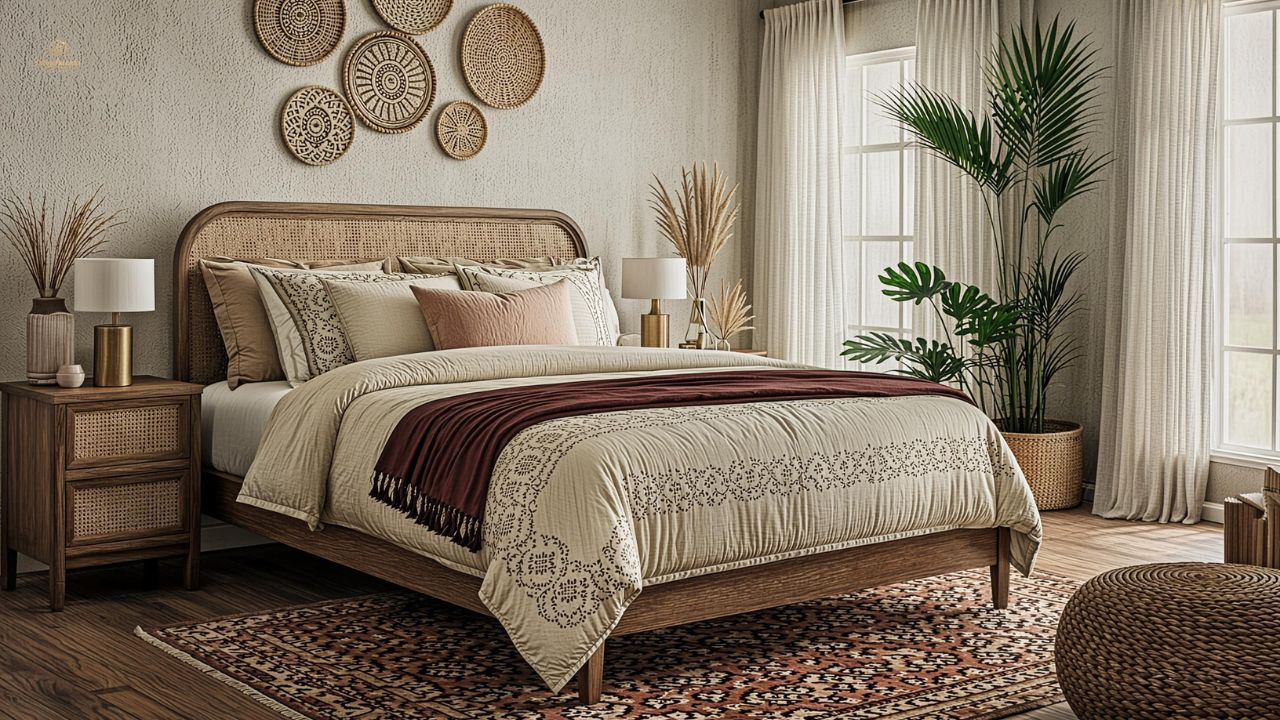
Introduction
Some bedrooms look beautiful in photos but feel stiff the moment you walk in. A bohemian bedroom is different—it invites you to kick off your shoes, sink into soft layers, and feel like the room has a story.
That matters because your bedroom is not just where you sleep. It is where your nervous system exhales after a long day, where your morning starts, and where tiny design choices can quietly affect your mood, rest, and sense of comfort.
The best part? You do not need a huge budget or a perfectly curated showroom look. In reality, boho style works because it welcomes imperfection: the flea-market mirror, the handmade wall hanging, the slightly mismatched pillows, the travel find you still love five years later.
In this guide, we will walk through colors, textures, furniture, lighting, layout, styling mistakes, budget ideas, and practical design choices so you can create a room that feels relaxed, personal, and genuinely livable.
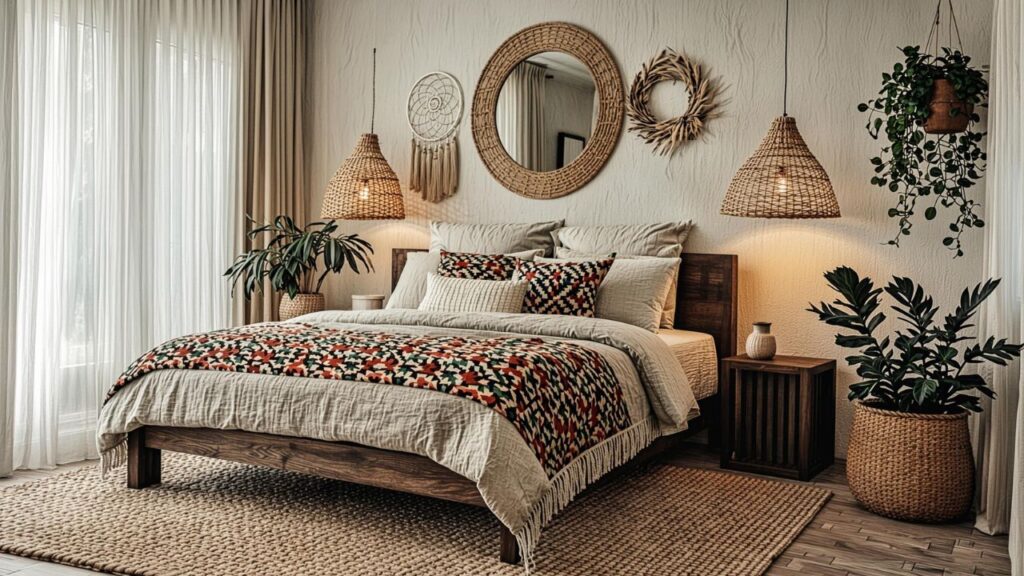
Table of Contents
- Definition and Style Basics
- Core Design Elements
- Color Palettes That Feel Calm
- Furniture and Layout
- Textiles, Rugs, and Bedding
- Lighting and Ambience
- Small-Room Styling Ideas
- Budget-Friendly and Sustainable Choices
- Common Mistakes to Avoid
- Styling Checklist
- Frequently Asked Questions
- Conclusion
What Is a bohemian bedroom?
A boho-style bedroom is a relaxed, expressive sleeping space built around layered texture, collected decor, natural materials, global influences, and a sense of personal freedom. Instead of matching every piece, the look blends woven surfaces, soft textiles, vintage details, handmade accents, plants, books, art, and warm lighting.
The beauty of a bohemian bedroom is that it does not chase perfection. It feels curated over time, as though every blanket, basket, and framed print came from a trip, a memory, a favorite shop, or a person you love.
At its heart, bohemian decor favors creativity over rules, comfort over formality, and character over showroom symmetry. That said, the best boho bedrooms still need balance and breathing room so they feel soulful rather than chaotic.
Interior design editors often describe boho spaces through ideas like natural materials, artisanal decor, eclectic layering, and a lived-in atmosphere. Those are the ingredients that make the style feel warm instead of staged.
A simple definition
A boho bedroom is a cozy, layered room that mixes earthy color, tactile materials, vintage or handmade accents, and relaxed styling to create a personal retreat.
What makes it different from modern or minimalist decor?
Modern bedrooms often lean on clean lines, restrained color, and open negative space. Minimalist rooms strip things down even further. Boho interiors, on the other hand, invite more feeling into the space. A patterned rug can sit beside a cane nightstand. Linen bedding can mix with embroidered cushions. A sculptural lamp can share the room with thrifted art and a trailing pothos.
However, boho does not have to mean cluttered. The modern version is softer and more intentional: fewer items, better textures, calmer color, and meaningful pieces instead of piles of decor.
Core Elements That Create the Look
If you want the room to feel natural rather than forced, begin with the big design ingredients. These elements show up again and again in beautiful boho spaces because they add warmth, depth, and emotional texture.
1. Natural materials
Wood, rattan, bamboo, cane, jute, linen, cotton, clay, stone, leather, and wool instantly soften a room. They also age gracefully. A solid wood bench with a few scuffs usually looks more charming, not less.
Use natural materials in:
- Bed frames and headboards
- Nightstands and benches
- Storage baskets
- Pendant lights
- Rugs and curtains
- Trays, bowls, and ceramics
2. Layered texture
Boho design is very tactile. The room should make you want to touch things: a nubby throw, a woven basket, a tasseled cushion, a washed linen duvet, a hand-knotted rug.
A simple trick is to combine three textures on the bed: cotton sheets, a linen duvet, and a chunky knit or woven throw. Then echo those textures through baskets, curtains, and wall decor.
3. Pattern with personality
Patterns are a boho signature, but they work best when they share a color family. You might mix a Moroccan-inspired rug with striped pillows and a small floral block print, as long as the colors feel connected.
Good pattern options include:
- Kilim motifs
- Mudcloth-inspired prints
- Block prints
- Ikat patterns
- Vintage florals
- Subtle stripes
- Geometric woven designs
4. Handmade and collected pieces
The easiest way to avoid a generic room is to include pieces that feel touched by human hands. Think pottery, carved wood, embroidered textiles, framed sketches, macrame, handwoven baskets, or a lamp with an imperfect ceramic base.
This is where real-life character comes in. A grandmother’s wooden stool can become a plant stand, and a favorite scarf can become wall art. Small details make the room feel alive.
5. Plants used thoughtfully
Plants bring shape, softness, and a bit of wildness. They also pair beautifully with woven textures. Still, it is better to be honest about what plants can and cannot do. The EPA notes that a normal number of houseplants has not been shown to remove significant pollutants in real homes, so use plants for beauty and mood rather than treating them as a full air-purifying system.
Easy bedroom-friendly plants include snake plant, pothos, ZZ plant, peace lily, philodendron, and trailing ivy. If your room gets little light, choose low-maintenance greenery.
bohemian bedroom Color Palettes That Feel Calm
Color is where many people accidentally go too loud. Boho can be vibrant, but bedrooms usually work better when the palette supports rest. Sleep experts note that bedroom color may influence sleep indirectly through mood and emotion, even though direct research on color and sleep is limited.
For a bohemian bedroom that feels restful, start with a warm neutral base and build in earthy accents. Imagine sand, clay, cream, olive, rust, muted gold, walnut, terracotta, dusty rose, charcoal, and soft sage.
Best base colors
Base colors should cover your largest surfaces: walls, bedding, curtains, rug, or big furniture. These shades create the calm backdrop that lets layered decor shine.
| Base color | Mood it creates | Best pairings |
|---|---|---|
| Warm white | Clean, airy, relaxed | Rattan, oak, jute, terracotta |
| Cream | Soft, cozy, timeless | Walnut, brass, camel, sage |
| Greige | Modern, grounded | Black accents, linen, clay |
| Sand | Natural, beachy, calm | Cane, cotton, olive, blue-gray |
| Soft taupe | Earthy, mature | Rust, ivory, antique wood |
Accent colors that work beautifully
Accent colors bring personality without overwhelming the room.
- Terracotta for warmth and desert energy
- Olive green for a grounded, organic feeling
- Dusty rose for softness
- Mustard for a sunny vintage note
- Indigo for depth and contrast
- Rust for cozy autumn warmth
- Charcoal for modern edge
- Clay pink for gentle warmth
The safest formula is 60% neutral, 30% earthy secondary color, and 10% bolder accent. For example: cream walls and bedding, olive curtains and a jute rug, then rust pillows and brass lamps.
A real-life palette example
Picture a rented apartment bedroom with plain white walls. Instead of painting, add a sand-colored duvet, a rust lumbar pillow, a sage throw, a jute rug, and a wooden nightstand. Hang a woven wall piece above the bed. Suddenly the white walls look intentional, not empty.
Start Your bohemian bedroom With the Bed
The bed is the emotional center of the room. Before buying wall art, baskets, or tiny accessories, make the bed feel inviting. In a boho space, the bed should look soft but not fussy, layered but not overworked.
Choose the right bed frame
A low-profile wooden bed, cane headboard, rattan frame, upholstered linen headboard, or simple platform bed all work well. If your room is small, avoid a bulky frame with heavy storage drawers unless you truly need them. Airy legs and visible floor space help the room breathe.
Popular bed-frame materials:
- Rattan or cane for lightness
- Oak or pine for casual warmth
- Walnut for a richer, moodier look
- Linen upholstery for softness
- Reclaimed wood for rustic character
Sustainability is also part of many modern bedroom conversations. Recent design trend coverage continues to highlight eco-conscious choices such as reclaimed wood, organic cotton bedding, and non-toxic paints as people look for spaces that feel good and do less harm.
Build relaxed bedding layers
Bedding is where boho style becomes deeply comforting. Start with breathable sheets, add a duvet or quilt, then layer throws and pillows with different finishes.
A practical bedding formula:
- Fitted sheet and flat sheet in cotton, linen, or bamboo
- Duvet or quilt in a warm neutral
- One textured throw folded loosely at the foot
- Two sleeping pillows
- Two decorative pillows
- One long lumbar pillow for shape
Do not add twelve pillows unless you enjoy moving twelve pillows every night. In reality, too many decorative pillows can make the room feel fussy and less livable.
Make it look effortless
The secret is controlled imperfection. Let a throw fall slightly off-center. Mix pillow sizes. Use a quilt with visible stitching. Choose bedding that wrinkles softly instead of fighting for hotel-level crispness. The room should say, “Come rest,” not “Do not touch anything.”
Furniture and Layout: Keep It Airy, Useful, and Personal
Boho design can handle a mix of furniture styles, but the layout still needs to make sense. A beautiful room becomes frustrating fast when drawers cannot open, lamps are too far from the bed, or a chair turns into a permanent laundry mountain.
Start with function
Ask three simple questions:
- Where do I put a book, phone, or glass of water?
- Where do I store everyday clothing?
- Where do I sit, stretch, or get ready?
Once those needs are clear, choose pieces that solve them without crowding the space.
Best furniture pieces for a boho room
| Furniture piece | Why it works | Styling tip |
|---|---|---|
| Cane nightstand | Adds texture without visual heaviness | Pair with a ceramic lamp |
| Wooden dresser | Grounds the room | Add a mirror and woven tray |
| Storage bench | Offers seating and hidden storage | Place at the foot of the bed |
| Vintage chair | Adds personality | Use it as a reading corner |
| Floating shelf | Saves floor space | Style with books, art, and a plant |
| Woven hamper | Keeps clutter contained | Choose a lidded version |
Mix old and new
A fully matching bedroom set can feel flat. Combine one or two new practical pieces with older or handmade accents, such as a modern platform bed, thrifted dresser, cane mirror, and ceramic lamp. Still, avoid mixing every wood tone randomly; most pieces should share a warm, medium tone.
Leave breathing room
Negative space is underrated in boho design. Leave some wall area empty. Keep at least one surface mostly clear. Let the rug show. A room with breathing room feels more expensive, calmer, and easier to live in.
Textiles, Rugs, and Bedding Layers
If furniture creates structure, textiles create soul. This is where you can add color, culture, comfort, and story without remodeling anything.
Rugs: the fastest transformation
A rug can change the entire emotional temperature of the room. Jute feels casual and organic. Wool feels warm and substantial. A vintage-style patterned rug brings color and history. A Moroccan-inspired rug adds softness underfoot.
For a queen bed, an 8-by-10-foot rug usually works well if the room allows it. Place it so the rug extends beyond both sides and the foot of the bed. If the budget is tight, layer a smaller vintage rug over a larger jute rug.
Curtains: softness and height
Hang curtains higher and wider than the window to make the room feel taller. Linen, cotton, gauze, or light-filtering textured curtains fit the boho mood beautifully. In bedrooms, consider pairing breezy curtains with blackout shades if streetlights or early sunlight disturb sleep.
The Sleep Foundation notes that temperature, noise, light, and comfort all play a role in creating a better sleep environment, so beauty and function should work together.
Pillows and throws
Pillows are easy to overbuy. Choose fewer, better pieces. Look for embroidery, woven detail, fringe, tassels, block prints, or subtle texture. Repeat colors from the rug or wall art so the bed does not feel disconnected from the rest of the room.
A good pillow mix:
- Two solid pillows in a natural fabric
- One patterned pillow
- One textured pillow
- One long lumbar pillow
Wall textiles
Macrame is the obvious choice, but it is not the only one. Try a small woven tapestry, framed textile scrap, vintage scarf, quilt fragment, or handmade fabric panel. Fabric on the wall softens sound and adds visual warmth, especially in rooms with hard floors.
bohemian bedroom Lighting for a Soft Evening Glow
Lighting can make or break a cozy room. One harsh overhead light can flatten every beautiful texture you worked hard to create. Instead, aim for layered lighting: ambient, task, and accent.
Use warm bulbs
Warm light feels gentler at night than cool white light. Sleep Foundation guidance notes that dim yellow and orange light have less impact on circadian rhythm than cooler blue light, making warm-toned lighting a better evening choice.
Look for warm bulbs around 2700K, dimmable lamps, or shaded fixtures that diffuse light. Avoid bright blue-white bulbs in bedside lamps unless you use them only for daytime tasks.
Layer your light sources
Use:
- A soft overhead pendant or flush mount
- Two bedside lamps or wall sconces
- A small accent lamp on a dresser
- A candle warmer or lantern-style light
- String lights only if they feel intentional, not dorm-like
Choose fixtures with texture
Rattan pendants, paper lanterns, ceramic lamps, pleated fabric shades, brass sconces, and carved wooden bases all fit the look. The fixture does not need to shout; it just needs to add warmth.
Think about sleep, not just style
The National Sleep Foundation recommends a bedroom temperature between 60 and 67 degrees Fahrenheit and emphasizes darkness, quiet, and comfort for better rest. So, while styling the room, avoid placing bright lamps at eye level, keep electronics visually quiet, and use window treatments that support actual sleep.
Wall Decor, Art, and Personal Objects
A boho room should not look like it was copied from a single online cart. The walls are a perfect place to show personality.
Create a collected wall
Instead of one mass-produced print, combine a few meaningful pieces: a framed sketch, small landscape painting, woven plate, travel photograph, vintage mirror, handmade wall hanging, or shelf with pottery. Leave enough air between pieces so the wall feels curated, not crowded.
Use mirrors carefully
Mirrors bounce light and make small rooms feel larger. A round rattan mirror, arched wood mirror, or vintage brass mirror works especially well. Avoid placing a mirror where it reflects clutter, an unmade laundry corner, or harsh light.
Display real objects
A stack of books, a handmade bowl, a framed family photo, or a shell from a beach trip can say more than generic decor. Boho style loves evidence of a life lived.
Small bohemian bedroom Ideas That Do Not Feel Crowded
Small bedrooms can be gorgeous in boho style, but they need restraint. The goal is cozy, not cramped.
Use the wall space
Floating shelves, wall sconces, wall hooks, and mounted planters save floor space. A headboard with a slim ledge can replace bulky nightstands in very tight rooms.
Choose furniture with legs
Furniture raised off the floor creates the illusion of more space. A cane nightstand on legs feels lighter than a chunky block-style table. The same goes for benches, dressers, and chairs.
Keep the palette tight
In a small room, use fewer colors. Try cream, warm wood, jute, and one accent like rust or olive. Too many strong colors can make the walls feel like they are closing in.
Try vertical decor
Hang art higher, use tall plants, choose long curtains, and consider a vertical macrame piece. These details draw the eye upward.
Control clutter with baskets
Woven baskets are practical and beautiful, but use them with purpose. One basket for blankets, one for laundry, one for extra pillows. Ten baskets with no plan become visual noise.
Budget-Friendly and Sustainable Styling Ideas
You can create a soulful room without spending like a boutique hotel. In fact, budget constraints can make the room more creative because they push you toward thrifted, handmade, repurposed, and slower choices.
Shop your home first
Before buying anything, walk through your home. A living room basket might become blanket storage, a hallway mirror could move above the dresser, and a scarf might become wall art.
Thrift with a list
Thrifting is fun, but it is easy to bring home clutter. Search for specific items: wood frames, vintage lamps, ceramic vases, small stools, baskets, mirrors, quilts, side tables, and trays. Avoid upholstered vintage pieces unless you can inspect and clean them properly.
DIY simple accents
You do not need to be wildly crafty. Try replacing drawer knobs, framing fabric scraps, adding trim to plain curtains, painting a thrifted lamp base, or sanding and oiling a wooden stool.
Buy fewer, better pieces
A single high-quality linen duvet cover may do more for the room than five cheap throw pillows. A durable wool rug may last years longer than a trendy printed rug that curls at the corners.
Sustainable choices that actually make sense
Look for secondhand furniture, natural fibers, repairable wood pieces, washable covers, low-VOC paint, and items made by local artisans. Sustainability is not just a label; it is also about buying things you will not want to replace next season.
Common Mistakes to Avoid
Boho style feels relaxed, which sometimes makes people think there are no rules. There are no rigid rules, but some choices can make the room feel messy or visually exhausting.
Mistake 1: Buying everything from one store
When every item comes from the same collection, the room loses its collected charm. Mix sources: thrift, handmade, local shops, family pieces, and a few new basics.
Mistake 2: Using too many patterns
Pattern mixing is beautiful when colors repeat. It becomes chaotic when every pillow, rug, curtain, and blanket fights for attention. Choose one hero pattern, then support it with smaller or quieter patterns.
Mistake 3: Forgetting comfort
A scratchy rug, hard pillow, squeaky bed, or glaring lamp will ruin the mood. Comfort is not optional in a bedroom.
Mistake 4: Overloading plants
Plants are lovely, but too many can make a room damp, crowded, or difficult to maintain. Choose plants you can actually care for.
Mistake 5: Ignoring storage
Open shelves and woven baskets look nice in photos, but bedrooms collect real things: socks, chargers, skincare, books, receipts, and laundry. Closed storage keeps the room peaceful.
Mistake 6: Making it too beige
Neutral boho can be stunning, but without contrast it may look flat. Add black, walnut, rust, olive, brass, or indigo in small doses to create depth.
Styling Checklist for a Room That Feels Finished
Use this checklist when you are almost done and something still feels off.
| Area | What to check | Quick fix |
|---|---|---|
| Bed | Does it look inviting? | Add one textured throw |
| Rug | Is the floor grounded? | Layer a small rug over jute |
| Lighting | Is evening light soft? | Replace cool bulbs with warm bulbs |
| Walls | Do they feel personal? | Add one meaningful framed piece |
| Storage | Is clutter visible? | Use closed boxes or lidded baskets |
| Color | Is the palette connected? | Repeat one accent color three times |
| Texture | Does the room feel tactile? | Add woven, linen, wood, or ceramic |
| Plants | Are they healthy? | Remove struggling plants |
The “repeat three times” rule
If an accent color appears only once, it can look accidental. Repeat it three times. For example, rust can appear in a pillow, a small art print, and a ceramic vase. Olive can show up in curtains, a plant, and a patterned rug.
The final five-minute test
Stand at the doorway and ask:
- Where does my eye go first?
- Does the bed feel welcoming?
- Is anything visually annoying?
- Can I set down a cup or book easily?
- Does the room feel like me?
If the answer to the last question is yes, you are closer than you think.
Frequently Asked Questions
How do I make a bohemian bedroom feel modern?
Keep the base simple and let texture do the work. Use warm white walls, natural bedding, a clean-lined wooden bed, and one or two vintage or handmade accents. Avoid filling every surface. Modern boho feels calm, edited, and intentional.
What colors are best for a boho bedroom?
Warm neutrals, clay, terracotta, olive, cream, sand, taupe, rust, dusty rose, walnut, and muted gold work beautifully. If you prefer cooler shades, try indigo, blue-gray, or sage, but balance them with wood and woven texture.
Can I create this look in a rental?
Yes. Use removable wallpaper, plug-in sconces, oversized art, curtains, rugs, bedding, baskets, and freestanding shelves. These changes can transform the room without paint, drilling, or permanent renovations.
What is the easiest way to start?
Start with the bed and rug. A textured duvet, two thoughtful pillows, a throw, and a grounding rug will change the whole room faster than small accessories.
Is boho decor expensive?
It can be, but it does not have to be. Some of the best pieces are thrifted, handmade, repurposed, or collected slowly. Spend more on comfort items like bedding and rugs, then save on art, baskets, lamps, and accessories.
How many plants should I use in a bedroom?
Use as many as you can care for without crowding the space. For most rooms, one floor plant, one trailing plant, and one small plant on a dresser or shelf is enough.
What type of rug works best?
Jute, wool, cotton flatweave, Moroccan-inspired rugs, kilim rugs, and vintage-style patterned rugs all work well. Choose texture first, then color. Make sure the rug is large enough to connect the bed and surrounding furniture.
How do I avoid making the room look messy?
Limit the color palette, repeat materials, use closed storage, and leave some surfaces clear. Boho should feel relaxed, but it still needs editing.
Conclusion
A thoughtful bohemian bedroom is not about copying a trend or filling a cart with matching decor. It is about creating a room that feels warm, layered, personal, and easy to live in.
Start with the essentials: comfortable bedding, natural textures, soft lighting, a grounded color palette, useful storage, and a few pieces with real meaning. Then add slowly. Let the room evolve. The most beautiful boho spaces rarely look brand new; they look loved.
In the end, your bedroom should feel like a soft landing place. Not perfect. Not overly styled. Just calm, expressive, and deeply yours.