Introduction
There’s something deeply comforting about walking into a rustic kitchen. The scent of wood, the warmth of natural textures, and the quiet charm of traditional craftsmanship create a space that instantly feels like home. Unlike sleek modern kitchens that emphasize minimalism and technology, rustic designs celebrate imperfection, authenticity, and warmth.
A rustic kitchen blends natural materials, vintage elements, and earthy colors to create a welcoming atmosphere. Whether inspired by farmhouse living, countryside cottages, or mountain cabins, this style brings a sense of timeless character into the heart of the home.
Today, many homeowners are rediscovering the beauty of rustic interiors because they offer more than aesthetics—they create a lifestyle centered around comfort, simplicity, and meaningful living. If you’re dreaming of a kitchen that feels cozy, inviting, and rich with natural charm, this guide will help you design the perfect rustic space.

What Defines a Rustic Kitchen Style
Rustic design is rooted in nature and traditional craftsmanship. At its core, the style focuses on natural materials, weathered finishes, and simple functionality.
Natural Materials at the Core
The most recognizable feature of rustic interiors is the extensive use of organic materials. Wood, stone, clay, and iron all play important roles in creating a natural aesthetic.
Common rustic materials include:
- Reclaimed wood beams
- Natural stone countertops or walls
- Handmade ceramic tiles
- Wrought iron fixtures
- Copper cookware and accents
These materials bring texture and depth to the space while reinforcing a connection with nature.

Warm and Earthy Color Palettes
Color choices in rustic kitchens typically reflect the tones found in nature.
Popular rustic color schemes include:
- Warm browns and walnut tones
- Creamy whites and soft beige
- Muted greens and sage tones
- Terracotta and clay shades
- Natural wood finishes
These colors create a warm and calming environment that makes the kitchen feel welcoming rather than sterile.
Key Design Elements of a Rustic Kitchen
Designing a rustic kitchen involves combining several elements that work together to create an authentic atmosphere.
Reclaimed Wood Cabinets
Cabinets are one of the most visible features in any kitchen. In rustic interiors, they are usually made from reclaimed or distressed wood.

Characteristics often include:
- Visible wood grain
- Slightly weathered finishes
- Handcrafted appearance
- Simple panel designs
These cabinets add character and a sense of history to the space.
Farmhouse Sink
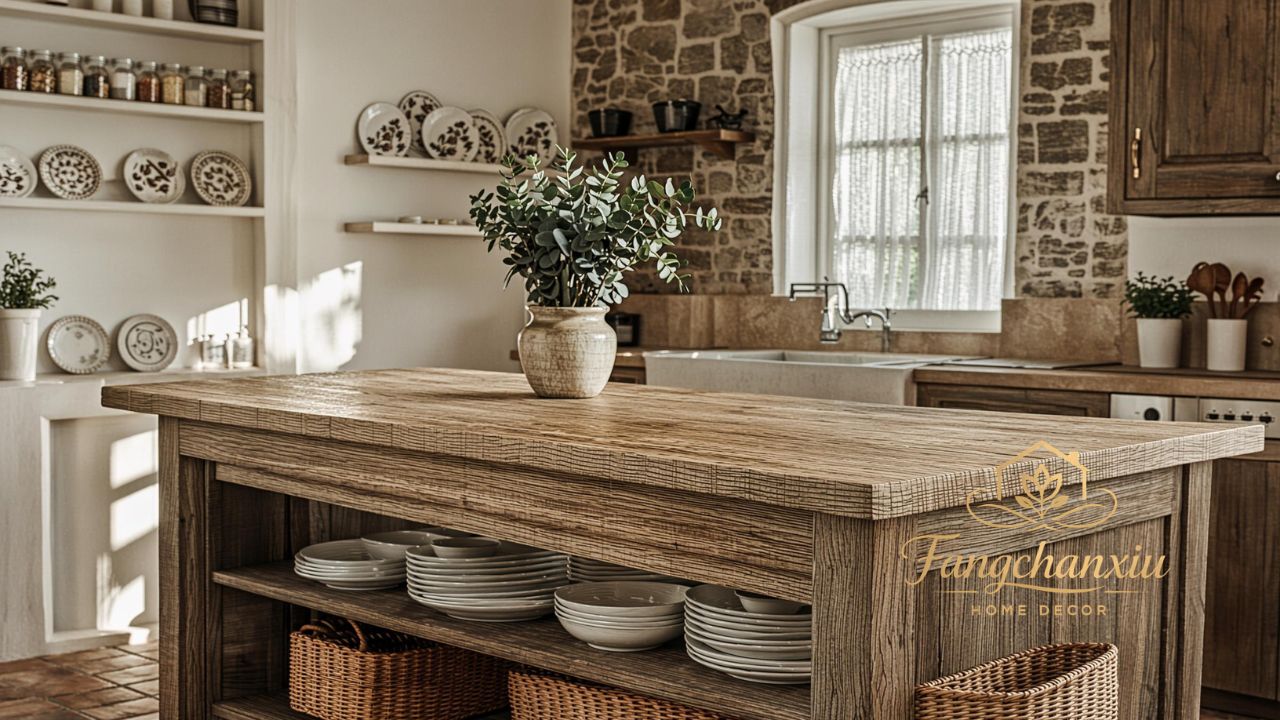
A farmhouse sink is almost synonymous with rustic kitchen design. Its deep basin and apron front offer both practicality and visual appeal.
Benefits include:
- Large space for washing dishes and cookware
- Durable materials like porcelain or fireclay
- Timeless aesthetic that fits rustic décor
Open Shelving
Open wooden shelves are a popular alternative to upper cabinets. They create an airy feel and allow homeowners to display everyday items.
Common shelf displays include:
- Mason jars and glass containers
- Handmade pottery
- Wooden cutting boards
- Vintage cookware
Open shelving enhances the rustic atmosphere by showcasing functional objects as décor.
Rustic Kitchen Layout Ideas
Layout plays an important role in making a rustic kitchen both beautiful and functional.
The Classic Farmhouse Layout
Farmhouse kitchens emphasize openness and practicality. They often feature a large central island where cooking, dining, and gathering take place.
Key features include:
- Spacious work surfaces
- Large farmhouse sink
- Wooden island countertop
- Comfortable seating area
This layout encourages family interaction and social cooking.

Cottage-Style Rustic Kitchen
Cottage kitchens are typically smaller but full of personality. They often incorporate vintage accessories and handcrafted details.
Design elements include:
- Painted wood cabinets
- Floral or patterned curtains
- Antique kitchen accessories
- Compact wooden tables
This style feels charming, nostalgic, and intimate.
Rustic Kitchen Lighting Ideas
Lighting dramatically influences the mood of a rustic kitchen.
Pendant Lights with Vintage Appeal
Pendant lighting is commonly used above kitchen islands and dining areas.

Popular styles include:
- Mason jar lights
- Industrial metal pendants
- Lantern-style fixtures
- Wrought iron chandeliers
These fixtures create soft, warm lighting that complements natural textures.
Natural Light Through Large Windows
Rustic interiors benefit greatly from sunlight. Large windows or glass doors help highlight the textures of wood and stone.
To maximize natural light:
- Use light curtains or linen drapes
- Install larger window frames
- Add skylights if possible
Natural light keeps the kitchen feeling open and welcoming.
Rustic Kitchen Storage Solutions
A rustic kitchen should remain practical and organized despite its relaxed appearance storage units in Chestermere .
Wooden Pantry Cabinets
A tall wooden pantry cabinet can provide additional storage while maintaining rustic charm.
Advantages include:
- Concealed storage for dry goods
- Matching wood finishes with other cabinets
- Classic farmhouse appearance
Hanging Pot Racks
Rustic kitchens often feature hanging racks made from iron or wood.
Benefits:
- Easy access to cookware
- Decorative display of copper pots
- Efficient use of vertical space

Rustic Kitchen Décor Ideas
Decorative details give the rustic kitchen its personality.
Vintage Accessories
Vintage items add authenticity and character.
Examples include:
- Antique kitchen scales
- Cast iron pans
- Vintage clocks
- Wooden bread boxes
These pieces bring history and charm into the space.
Natural Greenery
Plants soften the rugged textures of wood and stone.
Good plant choices:
- Herbs like basil and rosemary
- Hanging ivy
- Small potted olive trees
Greenery makes the kitchen feel lively and fresh.
Mixing Rustic and Modern Elements
Many homeowners today prefer blending rustic elements with modern convenience.
This hybrid style often includes:
- Modern appliances hidden behind wooden panels
- Sleek countertops paired with rustic cabinets
- Minimalist lighting with natural materials
The combination creates a balanced design that feels both timeless and practical.
Rustic Kitchen Flooring Options
Flooring anchors the entire design of the kitchen.
Hardwood Flooring
Hardwood is the most traditional option for rustic interiors.
Advantages include:
- Natural appearance
- Long-lasting durability
- Warm texture underfoot
Stone or Slate Flooring
Stone flooring enhances the earthy atmosphere of a rustic space.
Popular options include:
- Slate tiles
- Travertine
- Limestone
These materials add natural character and strong durability.
Benefits of Choosing Rustic Kitchen Design
Rustic kitchens remain popular for several reasons.

Timeless Style
Unlike trendy designs that fade quickly, rustic interiors remain relevant for decades.
Warm and Welcoming Atmosphere
The combination of wood, warm lighting, and natural textures creates a comforting environment.
Durable Materials
Many rustic materials—such as wood and stone—are strong and long-lasting.
FAQ
What makes a kitchen rustic?
A rustic kitchen is defined by natural materials, warm colors, and handcrafted details. Wood, stone, and vintage accents create a cozy and authentic atmosphere.
Are rustic kitchens still popular?
Yes. Rustic kitchens remain popular because they feel warm, timeless, and comfortable. Many homeowners combine rustic design with modern appliances for convenience.
What colors work best in rustic kitchens?
Earthy colors like brown, cream, beige, sage green, and terracotta work best because they reflect natural tones found outdoors.
Can small kitchens have a rustic design?
Absolutely. Even small kitchens can incorporate rustic elements like wooden shelves, farmhouse sinks, and vintage accessories.
What type of wood is best for rustic cabinets?
Common choices include oak, pine, maple, and reclaimed barn wood. These woods showcase beautiful grain patterns and natural textures.
Do rustic kitchens work with modern appliances?
Yes. Many rustic kitchens hide modern appliances behind cabinet panels or integrate stainless steel appliances for a balanced design.
What lighting suits rustic kitchens?
Warm lighting with vintage fixtures such as lanterns, iron chandeliers, or mason jar pendants works best.
Is rustic design the same as farmhouse style?
Rustic and farmhouse styles are closely related but slightly different. Farmhouse kitchens tend to be brighter and more polished, while rustic kitchens often feature rougher textures and darker woods.
Conclusion
Designing a rustic kitchen is about creating a space that feels warm, authentic, and inviting. By combining natural materials, handcrafted elements, and earthy colors, homeowners can build a kitchen that celebrates comfort and timeless beauty.
From reclaimed wood cabinets to farmhouse sinks and vintage lighting, every detail contributes to an atmosphere that feels relaxed yet stylish. Whether you prefer a cozy cottage aesthetic or a spacious farmhouse layout, rustic design offers endless opportunities to craft a kitchen that truly feels like the heart of your home.